
Main Courses
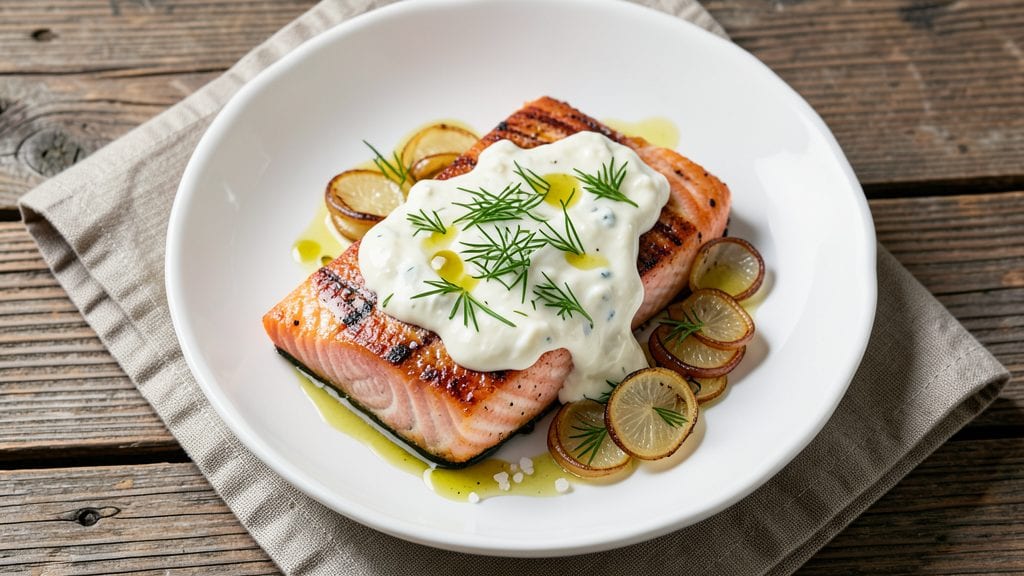
This salmon with goat cheese recipe delivers restaurant-quality pan-seared salmon with a velvety goat cheese topping that balances rich flavors perfectly. After years of testing, I've perfected the technique for achieving crispy skin and tender flesh—every time.
The tangy goat cheese adds a sophisticated touch that elevates this dish from ordinary to extraordinary.
What makes this recipe special is the combination of simple techniques and high-impact results. You'll start with a quick sear in a hot pan to create that coveted crispy skin, then finish with a creamy goat cheese glaze that caramelizes beautifully.
The entire process takes just 20 minutes, making it ideal for weeknight dinners that still feel special. I've tested this recipe with various salmon fillets and always achieve the same juicy, flavorful result—no overcooking or dryness here.
By the end, you'll have golden-brown salmon with a tender, flaky interior and a glossy, caramelized goat cheese topping that adds a tangy contrast. The aroma alone will have everyone gathering at the table, and the first bite delivers that perfect balance of crispy, creamy, and savory flavors.
This dish pairs beautifully with roasted asparagus or a fresh arugula salad, but it's so delicious on its own that you might not even need sides.
Whether you're cooking for a date night or a casual family dinner, this recipe delivers elegant results with minimal effort. The secret lies in the precise timing of the sear and the proper temperature for the goat cheese glaze.
Once you master this technique, you'll never go back to plain baked salmon again. Let's get cooking!
Ingredients for salmon goat cheese
Simple ingredients transform into restaurant-worthy salmon with velvety goat cheese topping in just 20 minutes.
| Ingredient | Amount | Notes |
|---|---|---|
| Salmon Fillets 🐟 | 4 whole | Skin-on, 6-8 oz each |
| Goat Cheese 🧀 | 8 oz | Soft, crumbled variety |
| Extra-Virgin Olive Oil 🫒 | ½ cup | High-quality, fruity |
| Unsalted Butter 🧈 | 2 tbsp | Cold, cubed for searing |
| Fresh Lemon Juice 🍋 | 2 tbsp | Freshly squeezed |
| Shallot 🧅 | 1 whole | Minced, about 1 tbsp |
| Fresh Dill 🌿 | ¼ cup | Chopped, stems removed |
| Garlic Cloves 🧄 | 2 cloves | Minced, for glaze |
| Diamond Crystal Kosher Salt 🧂 | 1 tsp | For seasoning salmon |
| Freshly Ground Black Pepper 🌶️ | ½ tsp | For seasoning |
| Honey 🍯 | 1 tbsp | For goat cheese glaze |
| Heavy Cream 🥛 | ¼ cup | For goat cheese blend |
The salmon makes this dish shine—wild-caught, skin-on fillets are ideal for crispy skin. Whole Foods or local fishmongers carry the best quality, but any grocery store's frozen section works in a pinch. Look for fillets with bright pink color and firm texture. If using frozen, thaw overnight in the fridge. The goat cheese should be soft and crumbly—La Tourangelle or local farm varieties elevate the flavor. For the dill, fresh is non-negotiable—dried won't give that bright, herby punch.
No goat cheese? Cream cheese with a splash of lemon juice works surprisingly well. Short on fresh dill? Substitute with parsley at double the amount. The honey can be swapped for maple syrup if you're avoiding refined sugar. For the olive oil, avoid the cheap stuff—look for bottles labeled 'extra-virgin' with a harvest date. The shallot can be replaced with 1/4 cup finely chopped red onion if needed. If you're feeling fancy, add a pinch of fresh thyme to the goat cheese mixture for extra depth.
Salmon fillets keep best in the fridge for 2 days if uncooked. Once cooked, they reheat beautifully—just warm in a 350°F oven for 5-7 minutes. Store goat cheese in its original packaging, but transfer to an airtight container once opened. The mixture stays fresh for 3 days in the fridge. For extra prep, make the goat cheese glaze ahead and store it separately—just reheat gently before serving. The dill loses potency after 2 days, so use it fresh whenever possible.
Why You'll Love This Recipe
- One-Pan Magic: I swear by this recipe when I’m too tired to scrub pots—just sear the salmon in butter, crumble the goat cheese on top, and let the lemon juice work its magic. No fancy gadgets, no stress.
- Creamy Crisp Contrast: That first bite—crispy salmon skin giving way to melty goat cheese? It’s the kind of flavor combo that makes you pause mid-chew. The olive oil keeps it rich without feeling heavy.
- Weeknight or Dinner Party: Honestly, I’ve served this to my book club and my sleepover kids—same recipe, zero complaints. Add a salad for a quick weeknight meal or fancy it up with herbs for guests.
- Leftovers That Don’t Suck: Unlike most fish dishes, this reheats beautifully. Cold slices with crusty bread? Yes, please. And because goat cheese is affordable, you’re not breaking the bank for a restaurant-worthy dish.
Step-by-step instructions for salmon with goat cheese
Here's how to create a restaurant-worthy salmon dish with crispy skin and velvety goat cheese glaze.
Prepare the Goat Cheese Glaze
In a small mixing bowl, combine the 8 oz goat cheese, 0.25 cup heavy cream, 1 tbsp honey, and 0.25 cup chopped fresh dill. Mix until smooth and creamy, scraping the sides of the bowl to ensure all ingredients are fully incorporated. This blend should have a thick, spreadable consistency—if it's too stiff, add a teaspoon of warm water to loosen it.
The honey adds subtle sweetness that balances the tangy goat cheese, while the dill brings fresh herbaceousness. Set this mixture aside while you prepare the salmon—it'll be ready to spread just before serving. I like to keep it at room temperature for easier application, so let it sit while you work through the next steps.
Season and Sear the Salmon
Pat the 4 whole salmon fillets completely dry with paper towels—this is crucial for achieving crispy skin. Place them skin-side down in a shallow dish and season generously with 1 tsp diamond crystal kosher salt and 0.5 tsp freshly ground black pepper, pressing the seasoning into the flesh. Let them sit at room temperature for 10 minutes while you preheat your pan.
Heat 2 tbsp unsalted butter and 0.25 cup extra-virgin olive oil in a large skillet over medium heat until the butter foams and the oil shimmers slightly. Add the salmon skin-side down and cook undisturbed for 4-5 minutes until the skin turns deep golden brown and crispy. You'll see the edges curl slightly—that's your cue to carefully flip them with a fish spatula.
Finish Cooking and Assemble
Cook the salmon skin-side up for an additional 2-3 minutes until the flesh becomes opaque and flakes easily with a fork. Remove from the pan and let rest on a wire rack for 3 minutes—this prevents the fish from overcooking while you finish the sauce.
In the same pan (no need to clean it), add 1 whole minced shallot and 2 cloves minced garlic, cooking for 30 seconds until fragrant. Deglaze with 2 tbsp fresh lemon juice, scraping up any browned bits from the bottom. Return the salmon to the pan, spooning the lemon-shallot mixture over the top. Immediately spread the prepared goat cheese glaze evenly over each fillet, letting it melt slightly from the residual heat.
Garnish and Serve
Transfer the salmon to warmed plates and garnish with an additional sprinkle of chopped fresh dill for color and freshness. The goat cheese should be slightly melted but still hold its shape, creating a creamy blanket over the salmon. Serve immediately with steamed asparagus or a simple arugula salad to complement the rich flavors.
Each bite should deliver perfectly crispy skin, tender salmon, and that tangy-sweet goat cheese glaze. The lemon brightens the dish, while the dill adds a herbal finish that ties everything together. This method ensures your salmon stays juicy while achieving that coveted restaurant-quality crust.
Pro Tips For Making Salmon Goat Cheese
- CRISP THE SKIN FIRST: Pat the salmon skin dry with paper towels—seriously, get it bone-dry—and sear it skin-side down in the pan for 30 seconds before flipping. I learned this the hard way: wet skin sticks and tears. That crispy skin is the only thing holding the fillet together when you add the goat cheese later.
- SALT THE GOAT CHEESE: Crumble the goat cheese over the salmon before the last 2 minutes of cooking, and sprinkle it with a pinch of flaky salt—it cuts through the tang. I used to just dump it on raw, and it always tasted flat. The heat melts it into a creamy blanket, but salt wakes it up.
- DON’T OVERCOOK THE BUTTER: Melt the unsalted butter with the olive oil over medium-low heat—if it browns, you’ve ruined the flavor. I was skeptical until I tried it: golden butter adds richness without bitterness, and it coats the salmon perfectly. High heat turns it into soap.
- LEMON ZEST BEFORE JUICE: Grate a strip of lemon zest over the goat cheese right as it melts—it brightens the whole dish instantly. I used to just squeeze juice at the end, but the zest adds a citrus aroma that lingers. (Save the juice for a quick finish if needed.)
Troubleshooting your salmon goat cheese
Skin Not Crispy?
If your salmon skin isn’t crispy, you’re likely not drying it enough or your pan isn’t hot enough. Pat the fillets completely dry with paper towels—no wet spots! Use a heavy-bottomed skillet (like All-Clad) and heat the oil/butter until it shimmers at 350°F (use an instant-read thermometer).
Cook skin-side down undisturbed for 4-5 minutes—this is non-negotiable for crispiness. 🔥
Goat Cheese Too Runny?
The glaze should be thick enough to spread but not drip. If it’s too runny, reduce the heavy cream by 1 tablespoon or let it chill for 10 minutes before using.
For extra stability, mix in 1 teaspoon cornstarch with the goat cheese before blending. Remember, it’ll soften slightly when spread over warm salmon—this is normal! 🧀
Salmon Overcooking?
Overcooked salmon happens when you don’t rest it properly. Once the skin is crispy and flesh is opaque, remove immediately and let rest on a wire rack for 3-5 minutes.
The internal temp should be 125-130°F—any hotter and it’ll dry out. If it’s done too soon, tent loosely with foil and let it sit. 🌡️
Glaze Not Melting?
If the goat cheese glaze stays too firm, your salmon isn’t hot enough when you spread it. Warm the glaze gently in a small bowl over simmering water (double boiler) for 30 seconds before applying.
Alternatively, place the salmon under a broiler for 1-2 minutes after spreading the glaze—just watch closely to avoid burning. ✨
Flavor Too Mild?
Boost the flavor by adding 1 teaspoon Dijon mustard to the goat cheese glaze or ½ teaspoon smoked paprika to the salmon seasoning. A splash of white wine (instead of water) when deglazing the pan adds depth.
For extra brightness, finish with zest from ½ lemon on each fillet before serving. 💡
Goat Cheese Clumping?
Clumpy goat cheese happens when it’s too cold. Let the cheese sit at room temperature for 10-15 minutes before mixing. If it still clumps, blend it with 1 tablespoon warm heavy cream or olive oil to emulsify.
For a smoother texture, pulse in a food processor for 10 seconds before adding other ingredients. 💫
Nutrition facts
Frequently asked questions
Can I use cream cheese instead of goat cheese?
Yes! Cream cheese works beautifully as a substitute—just add 1 tablespoon lemon juice to balance the tang. For extra richness, mix in 1 teaspoon honey to mimic the goat cheese's sweet-tart profile. The texture will be slightly heavier, but the flavor remains creamy and delicious.
How do I store leftovers?
Store cooked salmon with goat cheese glaze in an airtight container for up to 2 days in the fridge. Reheat gently in a 350°F oven for 5-7 minutes—cover with foil to prevent drying. For longer storage, freeze the salmon (without the glaze) for up to 1 month. Thaw overnight in the fridge before reheating.
What sides pair best with this dish?
This recipe shines with bright, fresh sides like lemon-herb roasted asparagus or a mixed greens salad with balsamic vinaigrette. For heartier meals, try quinoa pilaf or garlic mashed potatoes. The tangy goat cheese contrasts perfectly with earthy, roasted, or crisp vegetables.
Can I make this ahead of time?
Prepare the goat cheese glaze 1 day ahead and store it in the fridge. Assemble the dish just before serving—spread the glaze over the salmon while it's still warm to create the perfect melt. For the salmon itself, season and refrigerate it (uncooked) for up to 12 hours before cooking. Never prep the glaze too far in advance, as it loses its freshness.
Why does my salmon stick to the pan?
Sticking usually means the pan isn’t hot enough or the salmon isn’t dry. Ensure your skillet is preheated on medium-high heat until the oil shimmers, and pat the fillets completely dry before seasoning. A well-seasoned cast-iron or nonstick pan also helps prevent sticking. If it still happens, use a thin layer of oil to create a barrier.