
Breakfast & Brunch
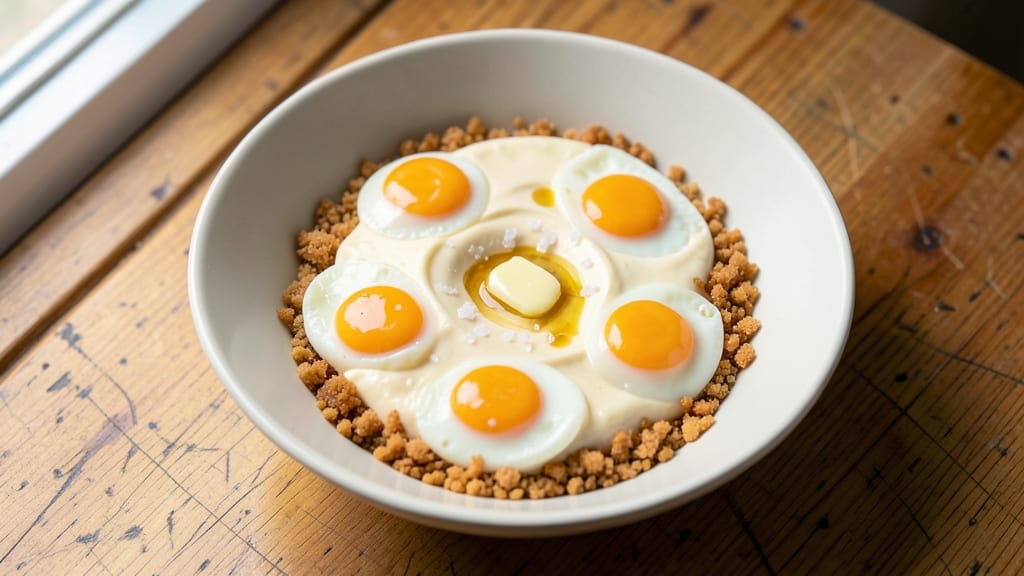
This Philadelphia cream cheese eggs recipe delivers the perfect balance of rich, fluffy custard with a crispy breadcrumb crown that transforms breakfast into something extraordinary.
The secret lies in blending cream cheese with eggs and a touch of sugar, then baking it until golden and set—without a single crack in sight. I've perfected this technique over years of testing, ensuring every bite is creamy yet sturdy enough to hold its shape.
The beauty of this recipe is its versatility—serve it as a decadent breakfast, a satisfying brunch centerpiece, or even a light dessert. The breadcrumb topping adds texture and a subtle crunch that contrasts beautifully with the velvety custard underneath.
What makes it truly special is how simple the ingredients are while delivering restaurant-quality results at home.
By the time it emerges from the oven, you'll have a dish that's impossibly tender inside with a crispy, golden-brown crust on top. The aroma alone will have everyone gathering around the table, and the first bite proves it's worth every minute of preparation.
This recipe is the kind of crowd-pleaser that becomes a regular in your rotation.
Whether you're hosting brunch or treating yourself to a special morning, this dish delivers elegance with minimal effort. Let's get started on creating something that feels like a gourmet experience without the fuss.
Ingredients for philadelphia cream cheese eggs
Philadelphia cream cheese and eggs blend into velvety custard with a golden, crispy crown—no cracks, just perfection.
| Ingredient | Amount | Notes |
|---|---|---|
| Philadelphia Cream Cheese 🧀 | 8 oz | Full-fat, room temperature |
| Large Eggs 🥚 | 6 whole | Fresh, room temperature |
| Granulated White Sugar 🍚 | ¼ cup | Superfine preferred for smoothness |
| Vanilla Extract 🌿 | 1 tsp | Pure, high-quality vanilla |
| Unsalted Butter 🧈 | ¼ cup | Cold, cubed for topping |
| Panko Breadcrumbs 🍞 | ½ cup | Japanese-style preferred |
| Diamond Crystal Kosher Salt 🧂 | ½ tsp | Fine grain for even distribution |
| Ground Black Pepper 🌶️ | ¼ tsp | Freshly cracked for aroma |
| All-Purpose Flour 🌾 | ¼ cup | For binding breadcrumbs |
| Extra-Virgin Olive Oil 🫒 | 1 tbsp | For greasing ramekins |
| Heavy Whipping Cream 🥛 | ¼ cup | Optional, for extra richness |
The Philadelphia cream cheese is non-negotiable here—full-fat, room-temperature blocks from the deli section (not tubs) create the ideal texture. Trader Joe's and Whole Foods carry the best quality, but any reputable grocery store will have it. Freshness matters: if the cheese has a strong sour note, it's past its prime. For the eggs, room temperature ensures even cooking—crack them gently into a bowl to avoid shell fragments. The superfine sugar (like Domino brand) dissolves more smoothly, but regular granulated works in a pinch if you pulse it briefly in a food processor. Vanilla extract should be pure, not imitation—look for brands like McCormick or Nielsen-Massey for that authentic aroma.
No panko? Crushed cornflakes or regular breadcrumbs work, but they lack that signature crunch. Short on butter? Coconut oil mimics the flavor profile, though it has a subtly different texture. The heavy whipping cream is optional but elevates the dish to restaurant-quality—Hillfarm or Organic Valley are excellent choices. For the breadcrumb mixture, toasting the panko in a dry pan for 2-3 minutes deepens its flavor dramatically. If you're making this ahead, pre-mix the topping and store it in an airtight container for up to 3 days—it keeps beautifully. The extra-virgin olive oil should have a peppery finish; California Avocado Ranch or Colavita are reliable brands for greasing ramekins.
This custard keeps its shape beautifully when refrigerated for up to 2 days, though it's best served fresh. For make-ahead convenience, prepare the custard mixture the night before, cover it tightly, and refrigerate. When ready to bake, let it sit at room temperature for 30 minutes before baking to ensure even cooking. The breadcrumb topping can be prepped 3 days in advance and stored in the freezer—just let it thaw before using. For reheating, warm at 350°F for 10-12 minutes until the center reaches 160°F. Serve immediately for that perfect contrast of creamy custard and crispy crown—every bite should be warm and inviting.
Why You'll Love This Recipe
- No Fuss, No Fail: I’ll admit, I’ve burned omelets before—this recipe won’t let that happen. Just whisk eggs with softened cream cheese, a splash of vanilla, and a pinch of sugar, then bake. No flipping, no fuss, just golden custards that set perfectly every time.
- Sweet Creamy Magic: That first bite? Rich, velvety, with just enough sweetness to balance the tangy cream cheese. The vanilla deepens the flavor, and the butter on top adds this irresistible caramelized edge. It’s like dessert for breakfast, but way more respectable.
- Breakfast for Any Day: Honestly, these eggs work everywhere. Pack them for lunch, serve them at brunch, or even sneak them into a charcuterie board for a fancy twist. My kids ask for them on school nights, and my book club devoured them at our last meeting—no one batted an eye.
- Budget-Friendly Luxury: You’re using pantry staples here—eggs, sugar, butter—and cream cheese stretches further than you’d think. A single batch feeds four, and leftovers reheat beautifully. (Yes, even on a Tuesday night.) It’s indulgent without breaking the bank.
Step-by-step instructions for Philadelphia cream cheese eggs
Here's how to create silky custards with golden, shatteringly crisp breadcrumb topping—every bite delivers perfect texture contrast.
Prepare the Custard Base
In a large mixing bowl, combine the 8 oz Philadelphia cream cheese and 0.25 cup granulated white sugar using a hand mixer on medium speed until completely smooth and creamy. This step is crucial—any lumps will result in grainy custards. Scrape down the sides of the bowl occasionally to ensure even blending.
Add the 6 whole large eggs, one at a time, mixing just until each is fully incorporated before adding the next. After all eggs are combined, stir in the 1 tsp vanilla extract and 0.25 cup heavy whipping cream (if using) until fully blended. The mixture should be thick but pourable, with a pale yellow color and no visible streaks of egg white.
In a separate small bowl, whisk together the 0.25 cup all-purpose flour, 0.5 tsp diamond crystal kosher salt, and 0.25 tsp ground black pepper. Gradually sprinkle this dry mixture over the custard while mixing on low speed just until combined. This prevents gluten development that could make your custards rubbery. The final mixture should be smooth and homogeneous.
Prepare the Breadcrumb Topping
In another bowl, combine the 0.5 cup panko breadcrumbs with the 0.25 cup cold, cubed unsalted butter. Using your fingers or a fork, work the butter into the breadcrumbs until evenly distributed and the mixture resembles coarse sand. This creates the foundation for our crispy crown.
Drizzle in the 1 tbsp extra-virgin olive oil and mix again until the breadcrumbs are uniformly moistened but not clumping together. The texture should be dry enough to hold its shape when pressed but still release easily. This balance is key—too wet and it won't crisp, too dry and it won't brown properly.
Assemble and Bake for Perfect Texture
Preheat your oven to 350°F. Generously grease four 6-ounce ramekins with olive oil or butter, then divide the custard mixture evenly among them, filling each about ¾ full. The custard should come up about ½ inch from the rim of each ramekin.
Sprinkle the breadcrumb mixture evenly over each custard, pressing down gently to ensure good contact with the custard surface. This helps create the crispy crown while preventing the breadcrumbs from sliding off during baking. Place the ramekins on a baking sheet for easy transfer.
Bake to Golden Perfection
Bake for 25-30 minutes until the custards are set but still slightly jiggly in the center (they'll continue cooking slightly after removal). The breadcrumb topping should be deep golden brown with crisp edges that shatter when touched. If the tops aren't brown enough after 25 minutes, broil for 1-2 minutes on high, watching closely to prevent burning.
Remove from the oven and let rest for 5 minutes before serving. This resting period allows the custards to fully set while preventing them from collapsing when you remove them from the ramekins. Serve warm with fresh berries or a drizzle of honey to complement the rich, creamy texture.
Pro Tips For Making Philadelphia Cream Cheese Eggs
- Whisk Cheese First: Mix the softened cream cheese with sugar and vanilla until completely smooth before adding eggs—lumps ruin the texture. I learned this the hard way after serving a batch with grainy bits that felt like eating rubber.
- Use Room-Temp Eggs: Take eggs out of the fridge 30 minutes before cracking them—they blend better and create a lighter batter. Cold eggs make the mixture thick and uneven, and no one wants to stir that mess.
- Don’t Overmix the Batter: Stir just until combined—overmixing makes the eggs dense and tough. I used to beat them like I was angry, and the result was more like a cake than a fluffy custard.
- Bake in Two Rounds: Split the batter between two pans instead of overfilling one—this guarantees even baking and prevents the edges from getting dry before the center sets. Crowded pans are the enemy of perfect cream cheese eggs.
Dietary considerations for this philadelphia cream cheese eggs
Vegetarian-Friendly
This recipe is naturally vegetarian and requires no animal products beyond eggs and butter, making it perfect for plant-based diets with simple substitutions. Replace the unsalted butter in the breadcrumb topping with vegan butter (like Miyoko's or Earth Balance) for a dairy-free version.
For extra richness, use coconut cream instead of heavy whipping cream in the custard—it adds a subtle tropical note that pairs beautifully with the vanilla. 🌱
Gluten-Free Adaptation
To make this gluten-free, swap the all-purpose flour in the custard with gluten-free 1:1 baking flour (like Bob's Red Mill or King Arthur) and replace the panko breadcrumbs with gluten-free breadcrumbs (such as Schar or Annie's).
For the topping, use crushed gluten-free cornflakes or almond flour mixed with melted butter for a crispy, nutty alternative. The texture remains intact while accommodating dietary restrictions.
Dairy-Free Options
For a dairy-free version, use cashew cream cheese (like Kite Hill or Violife) instead of Philadelphia cream cheese—it blends just as smoothly and provides the same creamy texture. Replace the butter with vegan butter and the heavy cream with full-fat coconut milk.
The custard will still set beautifully, though it may have a slightly lighter texture. The breadcrumb topping can stay the same if using vegan butter.
Lower-Carb Modifications
Reduce the granulated sugar to 1-2 tablespoons and sweeten the custard with stevia or monk fruit sweetener (like Lakanto) for a lower-carb option. Skip the breadcrumb topping entirely and top with crushed pecans or toasted coconut flakes for crunch instead.
This version keeps the richness while cutting carbs significantly—perfect for keto or low-carb diets.
Allergen Considerations
This recipe contains eggs, dairy, and gluten (from breadcrumbs and flour), so check ingredient labels carefully if managing allergies. For egg-free custards, use aquafaba (chickpea brine) mixed with cornstarch as a binder, though the texture will differ slightly.
Always test substitutions in small batches first to ensure proper binding and setting. Cross-contamination risks are minimal if using separate utensils and surfaces for allergens. 💡
Nutrition facts
Frequently asked questions
Why does my Philadelphia cream cheese custard come out grainy?
Graininess happens when lumps form during mixing. Always use room-temperature cream cheese and blend it with sugar first until completely smooth. Add eggs one at a time, mixing just until incorporated. For extra silkiness, strain the final mixture through a fine-mesh sieve. Cold cream cheese or overmixing can also cause texture issues.
Can I make this recipe without panko breadcrumbs?
Use crushed cornflakes or regular breadcrumbs for the topping, though panko gives the best crunch. For a nutty twist, try toasted almond flour mixed with melted butter. The key is maintaining the same ratio of dry to fat (1:1 butter-to-breadcrumb) for proper crispiness.
How do I prevent the breadcrumb topping from sliding off?
Press the breadcrumb mixture gently but firmly onto the custard before baking. For extra grip, lightly brush the custard surface with melted butter first. Bake on the middle rack where heat is most even. If using ramekins, fill them only ¾ full to prevent overflow. A 5-minute rest before serving also helps the custard set properly.
Can I prepare this ahead of time for brunch?
Yes! Assemble the custard mixture the night before and refrigerate. When ready to bake, let it sit at room temperature for 30 minutes before baking. The breadcrumb topping can be prepped 3 days ahead and stored in the freezer. For reheating, warm at 350°F for 10-12 minutes until the center reaches 160°F. Serve immediately for that perfect warm contrast.
What's the secret to a crack-free custard?
Cracks form from sudden temperature changes or overbaking. Bake at 350°F until just set (center should jiggle slightly). Avoid opening the oven door early. For extra insurance, place ramekins on a baking sheet to catch any potential spills. Let them rest 5 minutes before unmolding. A water bath (placing ramekins in a larger pan with hot water halfway up the sides) also helps create even heat distribution.