
Appetizers
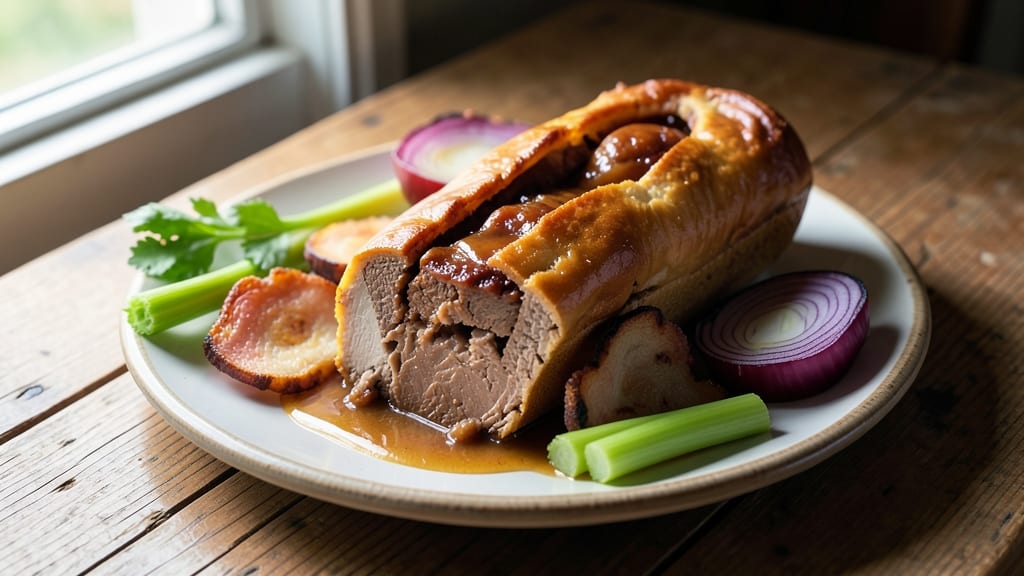
This old-fashioned head cheese recipe brings Southern tradition to your kitchen with its rich, jellied pork perfection that’s been a staple at family gatherings for generations.
The process transforms humble pork into a luxurious, sliceable centerpiece that’s equal parts comforting and impressive—think of it as the ultimate meaty gelatin dessert with deep, savory flavor.
What makes this dish truly special is how it transforms tough cuts into something tender and elegant, all while requiring just a few key techniques and patience.
The foundation of great head cheese lies in rendering fat and clarifying the broth to create that signature firm yet tender texture. You’ll work with a pork head (or substitute with pork shoulder), simmering it slowly to extract collagen-rich liquid that will later set into a glossy, wobbling masterpiece.
The gelatin binds everything together, giving you clean slices that hold their shape beautifully—no soggy edges here. This isn’t just a recipe; it’s a labor of love that rewards you with a dish worthy of holiday tables or casual Sunday suppers.
By the time you’re done, you’ll have a head cheese that’s rich, flavorful, and perfectly set—golden at the edges with a smooth, velvety interior that practically melts in your mouth.
The aroma alone will draw everyone to the table, and the first slice reveals layers of porky depth with just the right amount of firmness. Serve it chilled with crackers, bread, or even as part of a charcuterie board for an unforgettable appetizer that feels both rustic and refined.
Once you master this technique, you’ll never buy store-bought again.
This recipe is perfect for those who appreciate traditional Southern cooking with a modern twist—ideal for holiday menus, potlucks, or when you want to impress guests with a dish that’s both hearty and elegant.
The process might seem intimidating at first, but breaking it down into simple steps makes it accessible to any home cook willing to put in a little time. Let’s get started on creating your own head cheese masterpiece that’ll become a family favorite.
Ingredients for old fashioned head cheese
Six ingredients transform humble pork into a Southern centerpiece—rich, jellied, and perfect for holiday tables.
| Ingredient | Amount | Notes |
|---|---|---|
| Pork Shoulder 🥓 | 4 lb | Bone-in, cut into 2-inch cubes |
| Pork Head 🐷 | 1 whole | Optional for extra gelatin, cleaned |
| Unsalted Butter 🧈 | ½ cup | Full-fat for richness |
| Onion 🧅 | 1 whole | Yellow or red, chopped |
| Celery Stalks 🥬 | 4 whole | Chopped, with leaves |
| Carrot 🥕 | 2 whole | Medium, chopped |
| Garlic Cloves 🧄 | 6 cloves | Peeled, smashed |
| Bay Leaves 🌿 | 2 whole | Fresh preferred |
| Black Peppercorns 🌶️ | 1 tbsp | Crushed, freshly ground |
| Salt 🧂 | 2 tsp | Kosher or sea salt |
| Unflavored Gelatin 🍮 | 1 oz | Powdered, high bloom |
| Apple Cider Vinegar 🍎 | 2 tbsp | For brightness |
| Heavy Cream 🥛 | ½ cup | Full-fat for stability |
The pork shoulder is your star—bone-in cuts add extra flavor and collagen. If you can’t find a whole head, pork shoulder alone works, but the head gives that classic texture. I grab mine from Costco or my local butcher—they’ll even clean the head for you. Look for meat with good marbling; it’ll render fat beautifully. The gelatin is non-negotiable—high bloom powder sets cleanest, so skip the pre-made jello. For the veggies, Trader Joe’s has pre-chopped mirepoix mixes that save time (but chopping fresh is worth it).
No pork head? Double the pork shoulder—just simmer it longer. Short on gelatin? Add 1 extra pound of pork for more collagen. The vinegar can be swapped for white wine vinegar or lemon juice, but cider gives that classic Southern tang. Fresh bay leaves? Dried works at half the amount, but they’re cheap and easy to find. Want extra richness? Add 2 tbsp of bacon fat to the broth. The heavy cream at the end isn’t just for flavor—it helps the texture set smoothly, especially if your kitchen runs warm.
This keeps 3-4 days in the fridge, but it’s best after 24 hours when flavors meld. For long storage, wrap tightly in plastic and freeze for up to 6 months. Slice it thin—1/4-inch thick—so each piece has that perfect wobble. Serve with toasted bread or crackers, and trust me, it’s worth the wait. Leftovers? Reheat gently in the microwave with a splash of water to restore moisture.
Why You'll Love This Recipe
- No Fuss, Big Payoff: I swear, the hardest part is peeling the onions—everything else just simmers. You toss the pork shoulder and head into a pot with onions and celery, let it cook low and slow, then pour in the butter at the end. That’s it. No fancy techniques, no stress.
- Rich, Meat-Loaded Comfort: Between us, this is the kind of dish that makes you slow down. The pork shoulder stays tender while the head adds that deep, gelatinous richness—like a hug in a bowl. The butter at the end? Pure decadence. It’s the kind of flavor that lingers.
- Leftovers That Don’t Suck: Honestly, I make this on purpose so I have leftovers. The texture holds up for days, and it’s perfect cold or reheated. Slice it for sandwiches, cube it into soups, or just eat it straight from the fridge. No sad, dry meat here—just reliable, flavor-packed goodness.
- Budget-Friendly Crowd-Feeder: This recipe turns cheap cuts into a showstopper. Pork shoulder and head are affordable, and one batch feeds a family for days. Plus, it’s one of those dishes where the more people you serve, the happier you’ll be—because it’s always disappearing.
Step-by-step instructions for old fashioned head cheese
This traditional Southern method transforms humble pork into a rich, jellied masterpiece with perfect texture.
Prepare the Meat and Aromatics
Begin by cutting the 4 lb pork shoulder into 2-inch cubes, leaving the bone-in for extra flavor. If using the 1 whole pork head, clean it thoroughly and remove any remaining meat from the bones. This optional step adds extra gelatin for a firmer set.
In a large stockpot, combine the pork shoulder cubes with the 1 whole onion, 4 whole celery stalks, 2 whole carrot, 6 cloves garlic cloves, 2 whole bay leaves, 1 tbsp crushed black peppercorns, and 2 tsp salt. The vegetables should be roughly chopped to release their flavors into the broth. Add 4 cups of cold water (enough to cover the meat by about 1 inch) and bring to a simmer over medium-high heat.
Simmer the Broth and Strain
Once the broth reaches a gentle simmer, reduce the heat to low and let it cook uncovered for 3-4 hours, skimming off any foam that rises to the surface. This slow cooking process extracts maximum flavor and collagen from the meat and bones.
After simmering, carefully strain the broth through a fine-mesh sieve into a large bowl, pressing down on the solids to extract all the liquid. You should have about 6-8 cups of rich, flavorful broth. Discard the solids or save them for another use like soups or stews.
Prepare the Gelatin and Assemble
In a small bowl, sprinkle the 1 oz unflavored gelatin over ½ cup cold water from the broth. Let it sit for 5 minutes to bloom. Meanwhile, whisk the gelatin mixture into the 0.5 cup heavy cream until fully dissolved. This step ensures the gelatin disperses evenly for a smooth, firm set.
Return the strained broth to the stockpot and stir in the 2 tbsp apple cider vinegar. Bring the broth to a gentle simmer over low heat just until it begins to steam, then remove from heat. Slowly whisk in the gelatin-cream mixture, stirring constantly for 2 minutes until completely combined. The mixture should thicken slightly as it cools.
Set the Head Cheese
Pour the mixture into a greased 8x8-inch baking dish or loaf pan, smoothing the top with a spatula. Cover the dish tightly with plastic wrap, pressing the wrap directly onto the surface to eliminate air bubbles. Refrigerate for at least 6 hours, preferably overnight, until fully set.
Once set, the head cheese should have a firm but slightly jiggly texture, like a rich aspic. To serve, invert it onto a plate and slice into ½-inch thick portions. The result is a luxurious, melt-in-your-mouth centerpiece that captures all the deep flavors of slow-cooked pork and aromatic vegetables.
Pro Tips For Making Old Fashioned Head Cheese
- Trim the Fat First: Slice off the thick layer of fat from the pork shoulder and head before cooking—it’s the difference between a rich, flavorful head cheese and one that turns greasy. I learned this the hard way when my first batch ended up with a pool of rendered fat instead of a cohesive gel.
- Don’t Skip the Jellify: After simmering the pork and aromatics, strain the broth through a fine-mesh sieve twice—once to catch solids, once to get it crystal clear. My grandmother swore by this, and she was right: cloudy broth means a wobbly, sad head cheese instead of the firm, silky texture you want.
- Start Cold, End Slow: Chill the pork head and shoulder in ice water for 30 minutes before cooking—it tightens the fibers so they render evenly. Then, after the initial sear, drop the heat to a gentle simmer (180°F/82°C) and cook for at least 6 hours. Rushing this step means rubbery meat and a head cheese that falls apart.
- Butter Up the Mold: Brush the inside of your head cheese mold with melted unsalted butter—not oil—before pouring in the hot mixture. It creates a nonstick barrier so the head cheese releases cleanly, and the butter adds a subtle richness that cuts through the pork’s richness. (Yes, even if you’re impatient like me.)
Flavor customization for this old fashioned head cheese
Classic Southern Style
Start with the traditional approach by adding 1 tbsp of hot smoked paprika and ½ tsp of ground cloves to the broth during simmering. These spices create that iconic, slightly smoky depth that defines old-fashioned head cheese.
For extra richness, stir in 2 tbsp of rendered bacon fat when you combine the gelatin mixture—this adds a subtle smokiness that pairs perfectly with the pork. 🌶️
Herb-Infused Variation
Swap out the bay leaves for a bouquet garni of 1 sprig fresh thyme, 1 sprig fresh rosemary, and 3 sprigs fresh parsley tied together. Simmer these herbs with the pork for 2 hours, then remove them before straining.
The result is a bright, herbaceous head cheese with layers of aromatic complexity that cut through the richness. I like to add 1 tsp of dried marjoram to the gelatin mixture for an extra earthy note.
Spicy Kick Option
For those who love heat, add 1-2 tbsp of hot sauce (like Crystal or Tabasco) to the broth during the final simmer. Alternatively, stir 1 tsp of cayenne pepper into the gelatin mixture before whisking it into the broth.
If you prefer a sweeter heat, try ½ tsp of smoked paprika plus 1 tsp of honey—this balances the spice with a touch of caramelized sweetness that’s surprisingly delicious.
Creamy Garlic Twist
Increase the garlic to 8 cloves and add 1 tbsp of minced shallots to the broth. After straining, whisk in 2 tbsp of garlic-infused olive oil (made by steeping 4 garlic cloves in ½ cup olive oil for 30 minutes).
This creates a head cheese with a bold, garlicky punch that’s perfect for serving with crusty bread or as part of a charcuterie board. The oil adds a luxurious mouthfeel that elevates the dish.
Sweet and Tangy Glaze
Before setting the head cheese, brush the top with a mixture of 2 tbsp apple cider vinegar, 1 tbsp honey, and ½ tsp ground cinnamon. This creates a beautiful glaze with a sweet-tangy contrast that’s especially striking when sliced.
For an extra touch, sprinkle toasted pecans or chopped walnuts on top before refrigerating—they’ll add crunch and a nutty depth that complements the pork perfectly.
Umami Bomb Addition
Boost the savory profile by adding 1 tbsp of soy sauce or 1 tsp of fish sauce to the broth during the final 30 minutes of simmering.
For a vegetarian-friendly twist (though not traditional), stir in 1 tbsp of mushroom powder or 2 tbsp of finely chopped dried shiitake mushrooms during the simmer. This adds an earthy umami richness that deepens the flavor without overpowering the pork. 💡
Nutrition facts
Frequently asked questions
What’s the difference between head cheese and regular gelatin?
Head cheese isn’t cheese at all—it’s a rich, jellied pork dish made with collagen from slow-cooked meat and bones. The gelatin comes from the pork’s connective tissue, giving it that signature wobble, while traditional gelatin desserts use animal byproducts like hides or bones. This version is savory, meaty, and packed with deep pork flavor.
Can I make head cheese without a pork head?
The pork head adds extra gelatin, but you can use 4-5 lbs of pork shoulder instead. Simmer it longer (4-5 hours) to extract enough collagen for a firm set. For best results, include bones—they release more gelatin than meat alone.
Why did my head cheese turn out too soft?
Overcooking the broth breaks down collagen, while under-simmering leaves it weak. Aim for 3-4 hours of simmering and use 1 oz gelatin per 2 cups of broth. If it’s still too soft, try adding ½ oz more gelatin and reheating gently before setting again.
How do I store and reheat leftovers?
Wrap slices tightly in plastic and refrigerate for 3-4 days or freeze for up to 6 months. To reheat, microwave slices with 1 tsp water for 20-30 seconds—this restores moisture without melting the gelatin. For best texture, serve cold or at room temperature.
What are the best ways to serve head cheese?
Slice it ¼-inch thick for elegant appetizers with crackers, toasted bread, or pickles. For a festive touch, arrange slices on a platter with mustard, cornichons, and fresh herbs. It’s also perfect alongside roasted meats or in a charcuterie board for a Southern-inspired spread.