
Sauces & Condiments
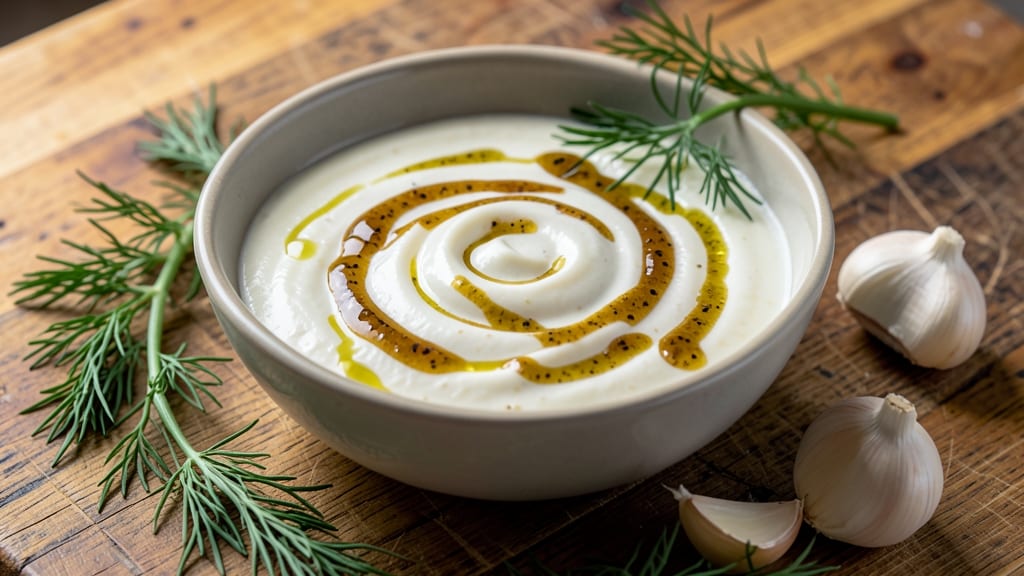
Transform any dish with this goat cheese dressing—where tangy goat cheese meets herbed freshness in a velvety, emulsified sauce that elevates salads, roasted vegetables, and grilled proteins alike.
The balance of acidity from lemon and mustard cuts through the richness, while fresh herbs and garlic add layers of complexity that store-bought versions can’t match. This recipe delivers restaurant-quality results with just five core ingredients and minimal effort.
What sets this dressing apart is its emulsified texture, achieved through a simple combination of goat cheese, mayonnaise, and olive oil. The goat cheese provides natural creaminess and a subtle tang, while Dijon mustard and lemon juice ensure the dressing stays light and bright.
Seasoned with fresh dill and garlic, it’s versatile enough for summer salads or drizzled over warm roasted vegetables. The best part? It comes together in just 10 minutes with no cooking required.
You’ll end up with a dressing that’s tangy yet balanced, creamy without being heavy, and packed with herbaceous freshness. Each spoonful delivers a harmonious blend of flavors that enhances any dish it touches. The emulsified consistency ensures it clings to greens and vegetables perfectly, making every bite more flavorful.
This dressing also stores beautifully in the refrigerator for up to one week, making it ideal for meal prep.
The possibilities are endless—drizzle it over a crisp Caesar salad, use it as a dip for bread or roasted potatoes, or toss it with warm pasta for an instant upgrade.
Its bright, herby notes make it a perfect match for spring and summer dishes, but its versatility ensures it’s a pantry staple year-round. Let’s get started with this foolproof recipe.
Ingredients for goat cheese dressing
Five core ingredients deliver restaurant-quality goat cheese dressing with emulsified tanginess and herbed freshness.
| Ingredient | Amount | Notes |
|---|---|---|
| Goat Cheese 🧀 | 1 cup | Creamy, full-fat variety preferred |
| Mayonnaise 🥛 | ½ cup | High-quality, unsalted preferred |
| Extra-Virgin Olive Oil 🫒 | 0.3 cup | Cold-pressed, fruity variety |
| Dijon Mustard 🍯 | 1 tbsp | Grainy texture preferred |
| Fresh Dill 🌿 | ¼ cup | Chopped, stems removed |
| Garlic Cloves 🧄 | 2 cloves | Freshly minced, roasted optional |
| Lemon Juice 🍋 | 2 tbsp | Freshly squeezed, no pulp |
| Sea Salt 🧂 | ½ tsp | Fine grain, Diamond Crystal preferred |
| Black Pepper 🌶️ | ¼ tsp | Freshly ground, coarse grind |
The quality of goat cheese determines the dressing’s character—opt for creamy, full-fat varieties like Bocconcini or Chavignol for optimal tang and texture. Whole Foods Market or Trader Joe’s carry excellent options, but specialty cheese shops often have the freshest selections. Fresh dill is non-negotiable for that signature herby brightness; avoid dried dill as it lacks the vibrant flavor. For garlic, roasting whole cloves before mincing intensifies their sweetness, though mincing fresh works equally well. The olive oil should be extra-virgin and cold-pressed—anything less compromises the dressing’s depth of flavor.
Substitutions are possible but require adjustments. Cream cheese can replace goat cheese at a 1:1 ratio, though the texture will be slightly denser. Substitute honey for 1 tbsp of lemon juice if you prefer less acidity, though it alters the balance. Mayonnaise can be swapped for Greek yogurt at a 1:1 ratio, but the dressing will be less stable—emulsify thoroughly with an immersion blender if using. Fresh herbs are ideal, but dried dill at half the amount works in a pinch. The Dijon mustard is essential for emulsification; plain yellow mustard will make the dressing grainier and less stable.
This dressing maintains its best quality for up to one week when stored in an airtight container in the refrigerator. To preserve freshness, pour a thin layer of olive oil over the surface before sealing, which prevents a skin from forming. For optimal texture, gently stir before each use—avoid shaking, as this can break the emulsion. Portion into small containers for meal prep, as it’s ideal for drizzling over salads, roasted vegetables, or grilled proteins. The dressing also freezes well for up to three months, though the texture may slightly separate upon thawing—re-emulsify with a quick pulse in a blender before using.
Why You'll Love This Recipe
- No-Fuss Assembly: I mix this in my blender while watching TV—literally. Just dump the goat cheese, mayo, olive oil, a squirt of Dijon, and chopped dill. Done. No fancy techniques, no stress. The goat cheese softens the mayo’s richness while the olive oil keeps it from being too heavy. Honestly, this is the kind of recipe that makes me feel like a shortcut is actually a blessing.
- Creamy-Tang Combo: That goat cheese? It’s like a bright, slightly tangy hug for your taste buds. The Dijon mustard cuts through the richness, and the fresh dill adds a pop of brightness that makes every bite feel intentional. I’ll be real: I’ve never met a dressing I didn’t want more of after trying this one—especially drizzled over roasted veggies or straight from the jar.
- Dresses Everything: This isn’t just salad dressing. Slather it on grilled chicken, toss it with pasta, or use it as a dip for crusty bread. My kids even sneak it onto their sandwiches. It’s the kind of dressing that turns a simple meal into something special without overcomplicating things. Plus, it keeps well for days—so you can make a big batch and not waste time.
- Chef’s Secret Hack: Forget expensive takeout. This recipe costs less than $5 for a jar’s worth, and it’s always ready when I need it. I double the batch for the week, and honestly? It’s my go-to for lazy Sundays or when I’m hosting last-minute. The goat cheese adds a gourmet touch without the fuss, and the fresh dill makes it feel like you put in extra effort—even though you didn’t.
Step-by-step instructions for crafting goat cheese dressing
This dressing balances rich goat cheese with bright citrus and aromatic herbs for restaurant-quality results.
Prepare the Herbal Base
Combine the Creamy Foundation
Incorporate the Aromatics and Acid
Season to Perfection
Rest and Adjust
Pro Tips For Making Goat Cheese Dressing
- Whip the Cheese First: Don’t just dump the goat cheese into the bowl—break it up with a fork or your fingers until it’s almost smooth before mixing. This prevents clumps from forming later, and the texture becomes silky instead of grainy. Trust me, I’ve tried adding it whole and regretted it every time.
- Use Room-Temperature Mayo: Take the mayo out of the fridge 10 minutes before mixing. Cold mayo creates resistance, and your dressing will turn into a sad, thick sludge instead of a light, creamy sauce. Warm it up just enough so it glides like butter—this is where the magic happens.
- Balance the Mustard Gradually: Start with half the Dijon mustard called for, then taste as you mix. Goat cheese dressing can turn bitter fast if the mustard overpowers, and you’ll end up with a dressing that tastes like a condiment store regret. Adjust in tiny increments until it’s tangy but not harsh.
- Chop the Dill Fine (But Don’t Pulse It): Finely chop the dill—smaller leaves = more flavor distribution, not just garnish. Skip the food processor unless you want it to taste like grass clippings; a sharp knife and a second bowl are your friends. Fresh dill should brighten the dressing, not dominate it.
Creative variations of this goat cheese dressing
Spicy Southwest Twist
Add 1 tbsp Penzeys hot honey and ½ tsp smoked paprika to the base mixture before resting. The honey adds sweet heat that contrasts beautifully with the tangy goat cheese, while the paprika brings smoky depth.
I also fold in 2 tbsp chopped jalapeños (seeds removed for mild heat) to introduce a fresh, spicy bite. This variation pairs perfectly with charred corn or grilled chicken. 🌶️
Herbed Walnut Crunch
For texture contrast, stir in ¼ cup toasted walnuts (lightly crushed) and an extra 1 tbsp chopped parsley alongside the dill. Toast the walnuts in a dry pan over medium heat for 3-4 minutes until fragrant, then let cool before adding.
The nutty crunch elevates the dressing when drizzled over kale salads or roasted Brussels sprouts.
Garlic & Herb White Balsamic
Swap the olive oil for ¼ cup white balsamic vinegar and add 1 tbsp honey to balance the acidity. Increase the garlic to 3 minced cloves and add 1 tbsp chopped chives for a bright, slightly sweet profile.
This version works wonderfully with roasted asparagus or seared scallops, where the vinegar’s sharpness shines.
Creamy Avocado Boost
Blend in ½ ripe avocado (pitted and peeled) along with the goat cheese for an extra-creamy texture. Add 1 tbsp lime juice instead of lemon to complement the avocado’s natural tang.
This variation is ideal for summer salads or as a dip for grilled shrimp. The avocado also helps stabilize the dressing longer when stored.
Smoky Chipotle Kick
Add ½ tsp adobo sauce from a jarred chipotle pepper and ¼ tsp ground cumin to the base mixture. The smoky, slightly spicy notes from the chipotle create a bold contrast to the creamy goat cheese.
This version pairs exceptionally well with black beans or roasted sweet potatoes. For extra heat, add ¼ tsp cayenne at the end.
Mediterranean Lemon Zest
Zest 1 lemon (about 1 tbsp) and fold it into the dressing along with 1 tbsp chopped Kalamata olives and 1 tsp dried oregano. The citrus zest adds a bright, aromatic lift, while the olives introduce a briny complexity.
This variation is perfect for Mediterranean bowls or as a marinade for grilled fish. 💛
Nutrition facts
Frequently asked questions
Why does this goat cheese dressing need Dijon mustard?
The Dijon mustard acts as an emulsifier, helping the oil and goat cheese blend seamlessly into a smooth, velvety texture. Without it, the dressing might separate or feel grainy. Plus, it adds a subtle tang that balances the richness of the goat cheese beautifully.
Can I make this dressing ahead of time?
Store it in an airtight container in the refrigerator for up to one week. For best results, pour a thin layer of olive oil over the surface before sealing to prevent a skin from forming. Just stir gently before using—no shaking!
What if my dressing separates after resting?
No worries! Simply blend with an immersion blender or whisk vigorously to re-emulsify. If it’s too thick, thin with a splash of water or lemon juice. If too thin, stir in a spoonful of goat cheese to restore creaminess. Most dressings separate slightly over time—it’s normal!
Can I use goat cheese crumbles instead of soft goat cheese?
Yes, but the texture will be slightly different. Crumbled goat cheese works well, though it may create a slightly chunkier dressing. For a smoother result, blend the crumbles briefly with a fork or small amount of mayo before mixing with other ingredients. The flavor will still be delicious!
How do I adjust the spice level?
Start with the base recipe, then add a pinch of cayenne pepper or a dash of hot sauce if you prefer more heat. For a milder version, reduce the garlic or omit the black pepper entirely. Taste as you go—this dressing is easy to customize!