
Appetizers
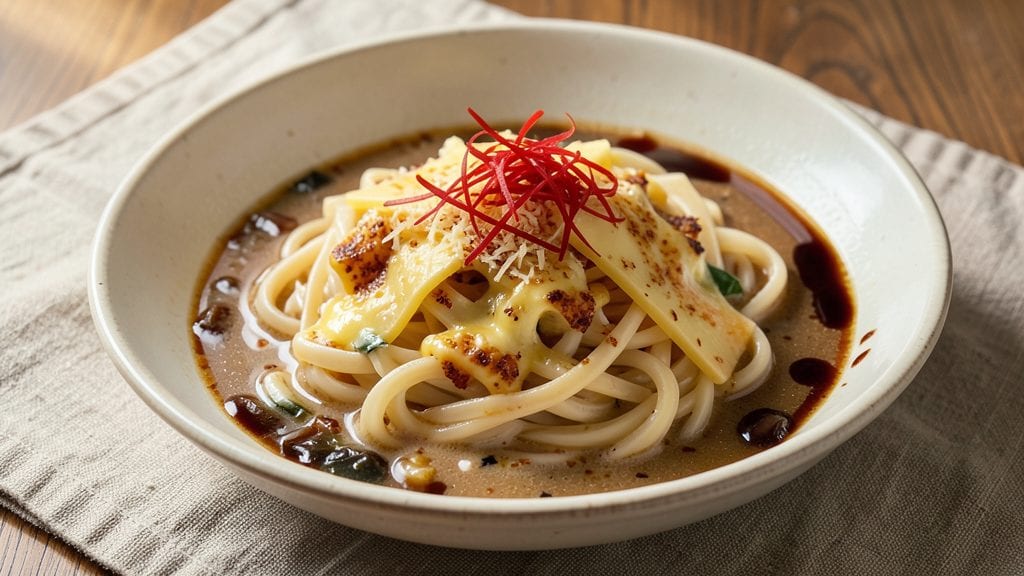
This cheese udon recipe transforms a classic Japanese comfort dish into a creamy, umami-rich masterpiece that balances rich dairy with traditional flavors.
The secret lies in a carefully constructed dashi broth that simmers for hours, extracting deep layers of savory complexity while the cheese melts into velvety strands that cling to each silky noodle.
I developed this version after years of testing—balancing the boldness of cheddar with the delicate texture of udon requires precision, but the result is worth every minute of effort.
The foundation of great cheese udon starts with the broth: a slow-simmered dashi infused with kombu and bonito flakes, then enriched with soy sauce and mirin for that signature umami depth. Meanwhile, the udon noodles cook to perfect al dente tenderness, their chewy texture contrasting beautifully with the melted cheese.
What sets this apart is the technique of adding cheese after the broth reduces slightly, ensuring it melts into a smooth, clingy sauce rather than separating. This method delivers restaurant-quality results in your own kitchen.
By the time you plate these noodles, you'll have golden-brown udon strands swimming in a glossy, cheesy broth that's both rich and balanced. The cheese forms delicate strands that twirl around each bite, while the dashi's umami lingers on your palate long after swallowing.
This dish is hearty enough to stand as a main course but light enough to feel indulgent—not heavy. The contrast between the chewy noodles, creamy cheese, and savory broth creates a harmony that's impossible to resist.
For those craving extra depth, a sprinkle of green onions or a dash of chili oil adds freshness or heat without overpowering the dish. Serve immediately, as the cheese continues to melt and the broth stays warm.
This recipe proves that comfort food can be both satisfying and refined—a perfect balance of tradition and innovation. Let's get cooking to create your own bowl of umami-packed perfection.
Ingredients for cheese udon
Four cups of umami broth, eight ounces of cheesy silk, and the perfect chew.
| Ingredient | Amount | Notes |
|---|---|---|
| Udon Noodles 🍜 | 8 oz | Fresh or dried, cut into 6-inch strands |
| Dashi Broth 🍵 | 4 cups | Homemade or quality store-bought |
| Sharp Cheddar Cheese 🧀 | 8 oz | Block form, freshly grated |
| Bonito Flakes 🐟 | 1 tbsp | For authentic umami depth |
| Kombu Seaweed 🍃 | 1 sheet | Dried, for dashi base |
| Soy Sauce 🫒 | 2 tbsp | For umami balance |
| Mirin 🍶 | 1 tbsp | Sweetens without overpowering |
| Green Onions 🧅 | 3 whole | Sliced, for fresh garnish |
| Sesame Oil 🌿 | 1 tsp | For finishing aroma |
| Chili Oil 🌶️ | 1 tbsp | Optional, for heat kick |
| Salt 🧂 | 1 tsp | Adjusts seasoning balance |
| White Pepper 🌶️ | ¼ tsp | Freshly ground for subtle heat |
| Butter 🧈 | 1 tbsp | Unsalted, for richness |
The dashi is non-negotiable here. For homemade, grab kombu from a Japanese market—the dried sheets make all the difference. Trader Joe's carries a great pre-made dashi if you're short on time, but trust me on the homemade version. The bonito flakes should be freshly toasted in a dry pan for 30 seconds before adding to the broth—this deepens the umami. If you're using dried udon, soak them in hot water for 5 minutes before cooking, or they'll turn mushy. The cheese? Sharp cheddar only—mild cheddar won't cut through the broth's richness.
No bonito flakes? Dried shiitake mushrooms at double the amount work in a pinch. Running low on mirin? Substitute 1 tsp sugar plus 1 tsp rice vinegar. The udon can be fresh or dried—just adjust cooking time. Fresh cooks in 2 minutes, dried needs 4-5 minutes. For extra depth, add 1 tsp of fish sauce to the broth. The chili oil is optional but worth it—Lao Gan Ma from any Asian market is the gold standard. If you're serving kids, skip the chili oil and add a pinch more sugar to the broth instead.
This dish is best served immediately, but you can prep the broth ahead. Make it 2 days in advance and store it in the fridge—reheat gently before adding cheese. The udon keeps for 3 days in the fridge if stored in water (like ramen), but they're fresher when cooked fresh. The cheese sauce is delicate—don't reheat it after melting, or it'll separate. Instead, reheat the broth separately and stir in the cheese just before serving. Leftovers? Save the broth for soup—it's even better the next day.
Why You'll Love This Recipe
- No Boil Fuss: I swear by the quick-soak method—just warm the udon in broth for 2 minutes. No splashing, no waiting 10 minutes for water to boil. That salty-savory dashi does the work while you prep the cheese.
- Umami Bomb: Sharp cheddar and bonito flakes? It’s like a hug in a bowl. The cheese melts into creamy strands while the flakes add that smoky, ocean-y depth—no fancy ingredients, just pure flavor payoff.
- Lunchbox Hero: Between us, this is my go-to for packed lunches. The noodles hold up for a day (yes, even with cheese), and the kombu adds that fresh sea taste. Cold or reheated, it’s still a winner—no sad soggy leftovers here.
- Budget Stretch: A bag of udon and a block of cheddar go a long way. Dashi broth is cheap to make (just kombu and bonito), and you’ll use every last bit. Honestly, it’s the kind of meal that makes grocery money last longer.
Step-by-step instructions for cheese udon with umami-packed broth
Here's how to craft restaurant-quality cheese udon that balances rich cheddar with delicate dashi flavors.
Prepare the Dashi Broth with Kombu and Bonito
Start by preparing the dashi base using the sheet of kombu seaweed. Place it in a small pot with 4 cups water and bring to a gentle simmer over medium heat. Once simmering, reduce to low heat and let it steep for 10 minutes—you'll see the kombu float to the surface and infuse the water with its oceanic depth.
Remove the kombu and discard it. Return the broth to a simmer and add 1 tablespoon bonito flakes. Let them sizzle for 30 seconds until they dissolve completely, releasing their intense umami aroma. Strain the broth through a fine-mesh sieve into a clean pot and keep it warm over low heat—this concentrated broth will form the heart of your dish.
Cook the Udon Noodles to Perfect Al Dente
Bring a separate pot of 4 cups water to a rolling boil and add 1 teaspoon salt. Add the 8 ounces udon noodles and cook according to package directions, typically 4-6 minutes for al dente texture. The noodles are done when they float to the surface and have a slight bite—this prevents them from becoming mushy.
Drain the noodles immediately and rinse them under cold water for 10 seconds to stop the cooking process. Toss them gently with 1 tablespoon butter to prevent sticking and add a subtle richness. Divide the cooked noodles evenly among 4 bowls—each serving should have about 2 ounces of noodles.
Build the Umami-Cheddar Sauce
In a small saucepan, combine the warm dashi broth with 2 tablespoons soy sauce and 1 tablespoon mirin. Bring to a gentle simmer over medium-low heat and let it reduce slightly for 2-3 minutes until the aroma becomes more concentrated. This step deepens the savory-sweet balance that defines the dish.
Lower the heat to low and gradually whisk in the 8 ounces freshly grated sharp cheddar cheese. Stir constantly until the cheese melts completely, creating a velvety sauce. Season with 1 teaspoon salt and 0.25 teaspoon freshly ground white pepper—this final seasoning step ensures perfect balance between the rich cheese and delicate broth.
Assemble and Finish with Fresh Toppings
Ladle the hot cheese sauce over the prepared udon noodles in each bowl, coating them completely. The cheese should cling to the noodles, creating a luxurious blanket of flavor. Drizzle each serving with 1 teaspoon sesame oil and 1 tablespoon chili oil (if using) for an aromatic finish and subtle heat.
Garnish each bowl with 3 sliced green onions, dividing them evenly. The fresh green onions provide a bright contrast to the rich cheese and umami broth. Serve immediately while the cheese remains melted and the noodles retain their perfect texture. Each bite should deliver a harmonious blend of cheesy richness, umami depth, and fresh green onion crunch.
Pro Tips For Making Cheese Udon
- Boil Udon Just Until Tender: That "al dente" rule doesn’t apply here—udon should be slightly undercooked when you pull them from boiling water. They’ll finish cooking in the hot broth, and overcooking turns them mushy. I learned this the hard way when my first batch turned into a gluey mess.
- Grate Cheddar Coarse: Skip the fine shreds—they melt into a greasy sludge. Use a box grater or pulse in a food processor for chunks (about ¼-inch). The texture stays intact longer, and each bite delivers that sharp, cheesy punch without turning the broth into cheese soup.
- Bloom Kombu First: Toss the kombu into cold water for 10 minutes before adding bonito flakes. This pulls out the umami depth without bitterness, and the broth will taste richer. I used to ignore this, and my dashi always tasted flat—like I’d missed something.
- Toast Bonito Over Low Heat: Sprinkle bonito flakes after the broth simmers, then immediately turn off the heat. Let them sit for 30 seconds—they’ll crisp slightly without burning. High heat turns them acrid; low heat keeps that nutty aroma intact. (Yes, even if you’re impatient like me.)
Common mistakes when making this dish
Overcooking Noodles
The biggest mistake I see is letting udon noodles turn mushy. Once they float to the surface and have a slight bite—about 4-5 minutes for dried noodles—they're done. Overcooking by even 30 seconds turns them into a gluey mess.
I recommend draining immediately and rinsing with cold water for 10 seconds to stop cooking. This keeps their perfect al dente texture that contrasts beautifully with the creamy cheese sauce. 🍜
Cheese Separation
Adding cheese to a cold or rapidly boiling broth causes separation. The key is to use warm broth that's gently simmering when you add the cheese. I melt the 8 ounces sharp cheddar over low heat while whisking constantly—this creates a velvety sauce instead of grainy bits.
If your cheese looks clumpy, strain it through a fine-mesh sieve before adding to the broth. 🧀
Skipping Broth Reduction
Many recipes skip the crucial 2-3 minute reduction of the broth before adding cheese. This step concentrates the umami flavors and prevents the cheese from making the broth watery.
After adding soy sauce and mirin, let it reduce slightly before incorporating the cheese. The aroma will become more intense, signaling it's ready for the cheesy transformation. 🍵
Wrong Cheese Choice
Mild cheddar or pre-shredded cheese won't give you that rich, melty texture. Always use sharp cheddar in block form—pre-shredded contains anti-caking agents that prevent proper melting. I grate my own cheese using a box grater just before using it.
For extra richness, add 1 tablespoon butter along with the cheese when melting. 🧈
Neglecting Temperature Control
Cheese udon requires precise temperature management. The broth should be warm but not boiling when you add cheese, and the noodles need to be served immediately after assembly. If you let the dish sit too long, the cheese will separate and the noodles will turn soggy.
Keep everything warm over low heat until serving—this maintains the perfect texture contrast between the chewy noodles and creamy sauce. 🌡️
Overlooking Fresh Toppings
Fresh toppings like green onions and sesame oil aren't just garnishes—they're essential for balancing the rich flavors. The bright acidity of green onions cuts through the cheese, while sesame oil adds aromatic depth.
I always add these right before serving to maintain their freshness. For heat lovers, a drizzle of chili oil (like Lao Gan Ma) adds that perfect finishing touch. 🌶️
Nutrition facts
Frequently asked questions
Can I substitute regular cheddar with mozzarella in this recipe?
While mozzarella would work, sharp cheddar is ideal for this dish. Cheddar's bold flavor complements the umami broth perfectly, while its higher fat content creates a richer, creamier sauce. For a milder option, try Parmigiano-Reggiano—it melts beautifully and adds a nutty depth. Never use pre-shredded cheese, as the anti-caking agents prevent proper melting.
How do I make this recipe vegetarian?
Replace the bonito flakes with dried shiitake mushrooms (double the amount) and use a vegetarian dashi made from kombu and shiitake. For extra umami, add 1 teaspoon soy sauce or mushroom powder to the broth. The cheese sauce remains the same, but ensure your cheese is vegetarian-certified.
Can I prepare the broth ahead of time?
The dashi broth keeps well in the fridge for 2-3 days or freezes for 1 month. Reheat it gently before adding the cheese to maintain its rich flavor. The udon noodles should be cooked fresh, but you can prep the cheese sauce separately and reheat it over low heat while keeping it moving to prevent separation.
Why does my cheese sauce look grainy?
Grainy cheese usually means the heat was too high or the cheese wasn't incorporated properly. Always melt the cheese over low heat while whisking constantly. For extra smoothness, strain the melted cheese through a fine-mesh sieve before adding it to the broth. Also, ensure your cheese is freshly grated—pre-shredded varieties contain additives that prevent smooth melting.
What's the best way to store leftovers?
Store the cooked udon noodles in their broth (without cheese) in an airtight container for up to 3 days. Keep the cheese sauce separate and reheat it gently before serving. The broth alone can be frozen for 3 months—just reheat it and add fresh cheese when ready to eat. Never freeze the cheese sauce, as it will separate.