
Appetizers
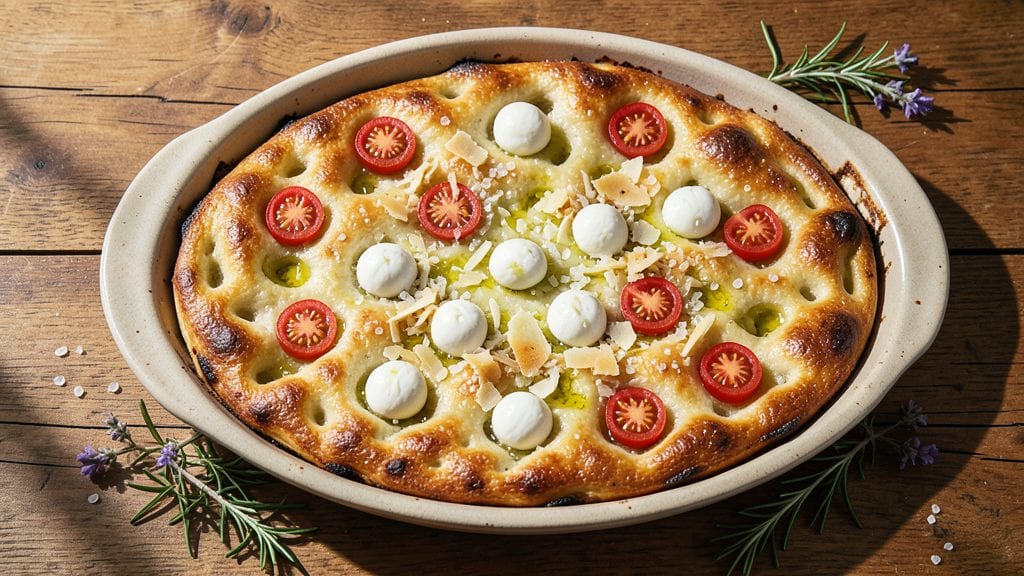
This cheese focaccia recipe delivers restaurant-quality golden olive oil bites with pockets of melted cheese that disappear in every bite. The secret lies in a precise dough formula and strategic cheese placement—mozzarella for stretchy pockets, parmesan for crispy flecks, and ricotta for creamy richness.
I've perfected this method over countless batches, ensuring that home bakers achieve the same airy, chewy texture and caramelized crust found in Italian trattorias.
The process begins with yeast activation in warm water, creating a light, fluffy dough that develops those signature air pockets.
After shaping the focaccia into a rectangular pan, we dimple the surface with our fingers before adding the cheese mixture—this creates those coveted pockets where cheese melts into gooey perfection while baking.
The olive oil drizzle not only enhances flavor but also contributes to that crispy, golden-brown crust that's impossible to resist.
What you'll end up with is a focaccia so decadent it belongs at the center of any meal—whether served as an appetizer with marinara for dipping or as a side alongside grilled meats.
The combination of savory cheese, aromatic olive oil, and flaky layers makes this more than just bread; it's an experience that transforms ordinary gatherings into something special. The best part? Every bite reveals new textures and flavors, from the crispy exterior to the soft, cheesy interior.
For those who love customization, this recipe easily accommodates variations like adding rosemary for an herbal touch or mixing in chopped olives for a briny contrast. The dough can be made ahead and refrigerated overnight, allowing flavors to develop even further.
Whether you're feeding a crowd or treating yourself to a foolproof baking project, this cheese focaccia delivers professional results with minimal effort.
Ingredients for cheese focaccia
Six ingredients transform simple flour into golden, cheesy focaccia with pockets that melt in your mouth.
| Ingredient | Amount | Notes |
|---|---|---|
| Active Dry Yeast 🍞 | ¼ tsp | Freshly opened for best activation |
| Warm Water 💧 | 1 cup | 110°F (43°C) for yeast activation |
| All-Purpose Flour 🌾 | 4 cups | Bread flour preferred for chewiness |
| Extra-Virgin Olive Oil 🫒 | ¾ cup | High-quality, fruity variety |
| Granulated Sugar 🍚 | 1 tbsp | For yeast activation |
| Diamond Crystal Kosher Salt 🧂 | 1 ½ tsp | Fine grain preferred |
| Shredded Mozzarella Cheese 🧀 | 2 cups | Freshly shredded, low-moisture |
| Freshly Grated Parmesan Cheese 🧀 | ½ cup | From a block, not pre-grated |
| Whole-Milk Ricotta Cheese 🧀 | ½ cup | For creamy pockets |
| Fresh Rosemary 🌿 | ¼ cup | Finely chopped, optional |
| Flaky Sea Salt 🧂 | ½ tsp | For finishing crust |
| Coarse Black Pepper 🌶️ | ¼ tsp | Freshly cracked |
| Unsalted Butter 🧈 | 2 tbsp | For greasing pan |
The yeast and flour are non-negotiable—King Arthur bread flour or Caputo Tipo 00 if you want that authentic Italian texture. Penzeys or bulk bins at Whole Foods are great for high-quality yeast. The olive oil should be extra-virgin, like California Olive Ranch—cheap oil makes cheap focaccia. For the cheeses, Sargento mozzarella is my go-to for shredding ease, but freshly grated Parmigiano-Reggiano from a wedge is worth the effort. Ricotta adds that creamy surprise—whole milk is richer than part-skim.
No mozzarella? Fontina or provolone melt beautifully, though texture differs. Short on Parmesan? Pecorino Romano works, but reduce to 0.375 cup—it's saltier. The rosemary is optional but adds that Italian trattoria aroma. If you skip it, add 1 tsp dried rosemary. For extra flakiness, mix 1 tbsp cornmeal into the flour. The butter for greasing? Full-fat ensures crispy crust—don't skimp here.
This dough keeps for 24 hours in the fridge, developing deeper flavor. For best texture, let it rise at room temp for 1 hour before baking. Store leftovers wrapped in parchment paper for 3 days—it reheats beautifully. Freeze portions for up to 3 months by wrapping tightly in foil. The crust stays crispy when reheated in a 350°F (175°C) oven for 5-7 minutes.
Why You'll Love This Recipe
- No-Knead Magic: I swear by this—just mix the yeast, flour, and olive oil, let it rise, then fold in cheese. No rolling, no fuss, just that satisfying dough pull-apart moment.
- Cheesy Crispy Bliss: The moment the focaccia hits the oven, the edges turn golden while the center stays soft—like a hug from Italy. Plus, that olive oil bath? Pure flavor gold.
- Weeknight Hero: Slice it for sandwiches, tear it for snacks, or serve it warm with dinner. Honestly, I’ve used it for everything from breakfast to late-night cravings without a second thought.
- Budget-Friendly Stretch: A single batch feeds four (or me for two days). The yeast and flour cost pennies, and the olive oil adds richness without breaking the bank—leftovers? Always delicious.
Step-by-step instructions for cheese focaccia recipe
Here's how to create golden focaccia with fluffy cheese pockets that melt in your mouth.
Activate the Yeast for Perfect Rise
In a small bowl, combine the 1 cup warm water (tested at 110°F with your finger—it should feel warm but not hot) with the 1 tablespoon granulated sugar and 0.25 teaspoon active dry yeast. Let it sit for 5-10 minutes until you see gentle bubbling and a foamy top. This confirms your yeast is alive and ready to work.
If no bubbles form after 10 minutes, your yeast might be dead—start fresh with a new packet. The yeast activation is the foundation of your focaccia's airy texture, so don't rush this step. Once bubbly, proceed immediately to avoid overproofing.
Mix the Dough and Incorporate Cheeses
In a large mixing bowl, combine the 4 cups all-purpose flour and 1.5 teaspoons diamond crystal kosher salt. Create a well in the center and pour in the yeast mixture. Gradually add the 0.75 cup extra-virgin olive oil while mixing with a wooden spoon until a shaggy dough forms.
Now fold in the 2 cups shredded mozzarella cheese, 0.5 cup freshly grated parmesan cheese, and 0.5 cup whole-milk ricotta cheese. These cheeses will create those signature melty pockets. Mix until just combined—overworking the dough will develop gluten and make your focaccia tough. The dough should be soft but slightly sticky, like wet sand.
Knead and Rest for Optimal Texture
Turn the dough onto a lightly floured surface and knead gently for 2-3 minutes until smooth. You're not making bread here—just enough to bring everything together. Shape into a rectangle about 12x8 inches and place it in a greased 9x13-inch baking dish, seam-side up.
Cover the dish tightly with plastic wrap and let the dough rise at room temperature for 1 hour. You'll know it's ready when it's puffed about 50% and springs back slowly when gently pressed. The cheese will create little bubbles as it rises, giving you those beautiful pockets later.
Create the Cheese Pockets and First Bake
Preheat your oven to 400°F. Using your fingers, gently press down on the risen dough to create dimples. Then, sprinkle the 0.25 cup finely chopped fresh rosemary evenly over the surface. Press the rosemary leaves into the dough so they release their aroma during baking.
Bake for 20 minutes until the edges are golden brown and the top looks slightly puffed. This first bake sets the structure while keeping the cheese pockets intact. Remove from the oven and let cool for 5 minutes—this prevents cracking when you add the finishing touches.
Finish with Olive Oil and Bake to Perfection
After the initial bake, drizzle 0.25 cup extra-virgin olive oil (about 2 tablespoons) evenly over the focaccia, letting it soak in for 1 minute. Then sprinkle with 0.5 teaspoon flaky sea salt and 0.25 teaspoon coarse black pepper. Return to the oven and bake for another 15-20 minutes until deeply golden and crisp.
The focaccia is done when it sounds hollow when tapped on the bottom and has a deep golden crust. Let it cool for 10 minutes before slicing—this allows the cheeses to set slightly and makes for cleaner cuts. Serve warm with a drizzle of the remaining olive oil for that authentic Italian touch.
Pro Tips For Making Cheese Focaccia
- Test Your Yeast First: Skip the guesswork—drop a pinch of yeast and sugar into warm water (110°F) for 5 minutes. If it doesn’t bubble, your yeast is dead or your water’s too hot, and your focaccia will flop. Trust me, I’ve wasted dough waiting for nothing.
- Oil That Dough Well: Don’t just sprinkle olive oil—work it into the dough like you’re giving it a massage. After the first rise, stretch the dough thin and brush it with generous oil, then sprinkle cheese before the second rise. This isn’t the time to be shy with the EVOO.
- Don’t Over-Knead: Focaccia dough is tender, not bread dough. Mix until just combined—overworking it makes it tough. I used to punch and fold like a maniac, then wondered why my focaccia tasted like a sad flatbread. Stop when the flour’s incorporated, not when your arm’s tired.
- Preheat That Pan: A cold pan = soggy focaccia. Heat your baking sheet or stone for 10 minutes at 450°F (or highest setting) before adding the dough. The residual heat helps the cheese melt faster and the crust crisp up instead of steam-baking into a gummy mess. (Yes, I’ve done the gummy mess.)
Serving suggestions for this dish
Appetizer Centerpiece
Transform your cheese focaccia into the star of any appetizer spread by cutting it into 1-inch squares or rectangular sliders for easy serving. Arrange on a wooden board with a drizzle of extra-virgin olive oil and fresh rosemary sprigs for an Italian-inspired presentation.
I like to serve mine alongside warm marinara sauce for dipping—just warm 1 cup marinara in a small saucepan over medium heat for 5 minutes and keep it warm in a slow cooker. 🍽️
Grilled Meal Side
Pair your focaccia with grilled favorites like steak or chicken breast for a complete meal. I recommend grilling 8-ounce ribeye steaks to medium-rare (130°F internal temp) and serving them alongside focaccia slices.
The cheesy, flaky bread soaks up any leftover juices beautifully. For a lighter option, grill lemon-herb chicken breasts and serve with focaccia on the side. 🍗
Breakfast Twist
Elevate your breakfast game by serving focaccia with scrambled eggs and crispy bacon. Cut the focaccia into thick slices and toast them in a 375°F oven for 5 minutes to revive crispiness.
Top with 2 fried eggs and 2 slices of bacon for a hearty, cheesy breakfast sandwich. Add a side of avocado slices for extra richness. 🍳
Wine and Cheese Pairing
Create a sophisticated wine and cheese board by pairing focaccia with dry white wines like Pinot Grigio or Vermentino. The crisp acidity cuts through the richness of the cheese. For a red wine option, choose a light-bodied Chianti—its bright cherry notes complement the focaccia beautifully.
Serve with cured meats like prosciutto and fig jam for a balanced flavor profile. 🍷
Make-Ahead Serving
Prepare focaccia ahead of time and store it in an airtight container at room temperature for up to 2 days. Reheat slices in a 350°F oven for 5-7 minutes to restore crispiness.
This makes it perfect for game day gatherings or holiday parties—just pop it in the oven when guests arrive. I like to serve it with spicy honey for dipping on the side. 🏈
Dessert Surprise
For a sweet twist, serve focaccia with dark chocolate ganache or whipped honey butter. Melt 4 ounces dark chocolate with 2 tablespoons heavy cream over double boiler heat and drizzle over warm focaccia slices.
Alternatively, mix ½ cup softened butter with ¼ cup honey and 1 tsp vanilla extract for a sweet topping. 🍫
Nutrition facts
Frequently asked questions
Can I make this cheese focaccia without yeast?
No, yeast is essential for the signature airy texture and those beautiful air pockets. However, you could try a quick bread version using baking powder (1.5 teaspoons) instead—just mix everything together, pour into a greased pan, and bake at 375°F for 25-30 minutes. The result will be denser but still delicious!
How do I prevent my focaccia from being too dense?
Overworking the dough develops too much gluten, making it tough. Knead only for 2-3 minutes and avoid pressing too hard when shaping. Let it rise at room temperature for 1 hour (not longer) and use bread flour for better structure without heaviness. Also, don't skip the olive oil—it keeps the crumb tender.
Can I add other cheeses besides mozzarella, parmesan, and ricotta?
Swap mozzarella for fontina (melts beautifully) or provolone (adds peppery notes). For extra richness, try goat cheese (reduce to 0.3 cup) or gorgonzola (for a tangy kick). Just adjust quantities—too much cheese can make the dough sticky. The ricotta adds creaminess, but mascarpone works too.
Why did my focaccia turn out flat instead of puffy?
Flat focaccia usually means the yeast didn't activate properly or the dough didn't rise enough. Double-check your water temperature (110°F) and yeast freshness. Let the dough rise in a warm spot (like near the oven with the light on) and cover it tightly. If it still doesn't rise, your yeast may be dead—start over with a new packet.
How long can I keep focaccia at room temperature?
Store wrapped in an airtight container for up to 2 days at room temperature. For longer storage, freeze portions (up to 3 months) by wrapping tightly in foil. Reheat slices in a 350°F oven for 5-7 minutes to restore crispiness. The cheese stays delicious but may lose some crunch.