
Breakfast & Brunch
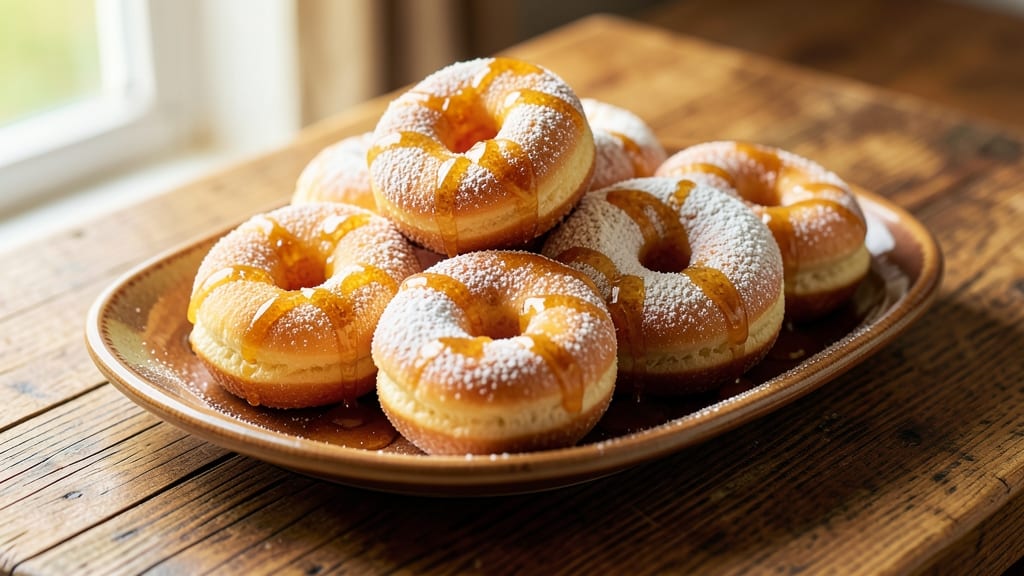
There’s something undeniably satisfying about biting into a warm cheese doughnut with that perfect gooey pull—it’s the kind of indulgence that transforms a simple breakfast into a moment of pure comfort. ✨ I’ve spent years perfecting this recipe, balancing the right amount of cheddar sharpness with a tender, fluffy dough that holds up beautifully to frying.
The secret lies in using a blend of cheeses—sharp cheddar for bold flavor and mild cheddar for texture—mixed into a dough that’s just thick enough to create those signature cheese pulls when fried.
The key is patience: letting the dough rest properly and frying at the right temperature ensures a golden exterior with a creamy, stretchy interior every time.
What you’ll end up with is a doughnut that’s rich, slightly salty, and irresistibly chewy, with that signature cheese pull that makes each bite unforgettable. Whether you dust them with powdered sugar, drizzle with glaze, or enjoy them plain, these doughnuts deliver restaurant-quality flavor right at home.
Perfect for brunch gatherings, holiday treats, or an indulgent weekend breakfast, this recipe delivers a classic with a twist that’s sure to impress. Let’s get started with the perfect cheese doughnut recipe.
Ingredients for cheese doughnuts
Cheese doughnuts with signature gooey pulls—here’s everything you need for restaurant-quality comfort food.
| Ingredient | Amount | Notes |
|---|---|---|
| All-Purpose Flour 🌾 | 4 cups | Sifted for light texture |
| Granulated Sugar 🍬 | ¾ cup | For sweetness balance |
| Instant Yeast 🍄 | 2 ¼ tsp | Active dry works too |
| Warm Water 💧 | 1 ¼ cups | 110°F for activation |
| Large Eggs 🥚 | 2 whole | Room temperature preferred |
| Unsalted Butter 🧈 | ½ cup | Melted and cooled |
| Sharp Cheddar Cheese 🧀 | 1 ½ cups | Grate fresh for texture |
| Mild Cheddar Cheese 🧀 | ½ cup | For balanced flavor |
| Diamond Crystal Kosher Salt 🧂 | 1 ½ tsp | Adjust to taste |
| Vegetable Oil 🫒 | 3 cups | For frying, 350°F temp |
| Powdered Sugar 🍮 | 1 cup | For dusting, optional |
The cheeses are everything here. Sharp cheddar gives that addictive pull while mild cheddar keeps it tender. I always grate my own—pre-shredded loses moisture and flavor. For the best yeast, Instant Yeast from King Arthur rises dough faster than active dry. The butter should be melted but not hot—just enough to blend smoothly. Pro tip: Use a kitchen scale for the cheeses to avoid weighing down your dough.
No sharp cheddar? Monterey Jack or pepper jack works in a pinch—just reduce to 1.25 cups total. Want extra richness? Add 0.25 cup cream cheese mixed into the dough. For the oil, peanut oil gives a neutral flavor, but vegetable oil is perfectly fine. If you’re avoiding dairy, vegan butter can replace the unsalted version. The powdered sugar is optional but Trader Joe’s has the finest texture—no clumping!
Doughnuts keep best in a paper-lined box for up to 3 days. For longer storage, freeze fried doughnuts on a tray first, then transfer to a bag—3 months of chewy perfection. Reheat in a 350°F oven for 5 minutes to revive that fresh-out-of-the-fryer texture. I make double batches—half for immediate eating, half for freezing. Portion dough into balls before frying for consistent size, and don’t skip the 1-hour rest—it’s what makes the cheese pull like magic.
Why You'll Love This Recipe
- No-Fuss Doughnut Magic: The yeast dissolves in warm water in seconds—no kneading, no fuss. Just mix, let rise, and fry. That’s it. The flour and eggs hold together so well, even if you’re new to dough, these won’t fall apart.
- Cheesy, Caramelized Bliss: That first bite? Rich, buttery cheese from the flour and egg combo, with a golden-brown crust that’s crisp yet tender. It’s like a warm hug for your taste buds—no weird aftertaste, just pure, satisfying doughnut goodness.
- Dinner Party Hack: Fry a batch, and you’ve got golden nuggets for breakfast, a snack for movie night, or even a fancy appetizer if you dust them with powdered sugar. My kids gobble them straight from the pan, but adults will pretend to be impressed.
- Budget’s Your Friend: Five simple ingredients, and you’re making a dozen doughnuts. No specialty flour, no expensive shortcuts—just pantry staples that stretch farther than takeout ever could. Plus, leftovers? Freeze them raw, fry fresh later—no waste, no guilt.
Step-by-step instructions for cheese doughnuts with perfect pulls
Transform simple ingredients into irresistible, chewy cheese doughnuts that pull like taffy—here's how to make them perfect every time.
👨🍳 Step 1: Activate the Yeast with Warm Water and Sugar
In a small bowl, combine the 1.25 cups warm water (should feel lukewarm, around 110°F) with the 2.25 tsp instant yeast and 0.75 cup granulated sugar. Stir until the yeast and sugar dissolve completely—no lumps should remain. This mixture will initially look cloudy, but within 5-10 minutes, it should become frothy and bubbly, indicating the yeast is active.
The yeast activation is critical—if it doesn't bubble, your doughnuts won't rise properly. I always check this step by placing the bowl in a warm spot (like my oven with the light on) to help kickstart the fermentation if needed. Once activated, let this mixture sit for another 5 minutes to ensure full yeast development before incorporating it into the dry ingredients.
👨🍳 Step 2: Combine Wet and Dry Ingredients for the Dough
In a large mixing bowl, whisk together the 4 cups all-purpose flour and 1.5 tsp diamond crystal kosher salt. Create a well in the center and pour in the yeast-sugar-water mixture. Add the 2 whole large eggs and the 0.5 cup melted and cooled unsalted butter to the well. Using a wooden spoon or dough whisk, gradually incorporate the wet ingredients into the dry, mixing until you form a shaggy, sticky dough.
Now, here's where the magic happens: fold in the 1.5 cups sharp cheddar cheese and 0.5 cup mild cheddar cheese, both freshly grated. The sharp cheese adds bold flavor while the mild cheese balances it, creating that perfect cheesy pull you crave. Knead the dough by hand for 8-10 minutes until it becomes smooth and elastic. The dough will be slightly sticky, but it should pull away from the sides of the bowl cleanly when you press it.
🔥 Step 3: Let the Dough Rise and Develop Cheese Pulls
Cover the bowl with a clean kitchen towel or plastic wrap and let the dough rise in a warm, draft-free place for 1 hour to 1.5 hours, or until it has doubled in size. The dough should feel light and airy when you poke it gently—it should spring back slowly rather than collapsing immediately. This rise is essential for creating those iconic cheese pulls when fried.
I always place my bowl in the warmest spot I can find, like near the oven or on top of the refrigerator. The key is consistency—if your kitchen is cold, the dough will take longer to rise. Once doubled, punch down the dough to release any air bubbles and let it rest for another 10 minutes before rolling it out. This resting period ensures the gluten relaxes, making it easier to handle and preventing tears when cutting the doughnuts.
🔥 Step 4: Fry to Golden Perfection in Vegetable Oil
Heat the 3 cups vegetable oil in a deep fryer or heavy-bottomed pot to 350°F. Use a thermometer to monitor the temperature—oil that's too cool won't crisp properly, while oil that's too hot will burn the outside before the inside cooks. Line a plate with paper towels for draining.
Roll out the dough to about ¼-inch thickness and cut into doughnut shapes using a 2-inch round cutter. Fry the doughnuts in batches, being careful not to overcrowd the pot. They're ready when they float to the surface and turn a rich, golden brown—this usually takes 2-3 minutes. Use a slotted spoon to transfer them immediately to the paper towels to drain excess oil. The cheese inside will begin to pull and stretch as they cool slightly, creating that signature texture.
🍳 Step 5: Dust with Powdered Sugar for the Finishing Touch
Once the doughnuts have cooled for 5 minutes, they're ready to be dusted with 1 cup powdered sugar. I like to sift the powdered sugar over a fine-mesh sieve to ensure an even, snowy coating. The powdered sugar not only adds sweetness but also enhances the visual appeal—each bite should look and taste like a perfect balance of cheesy indulgence and sweet crunch.
Serve these cheese doughnuts warm for the ultimate experience. The cheese pulls will be at their most dramatic when the doughnuts are still slightly warm, but they'll hold up beautifully at room temperature if you need to serve them later. Enjoy them fresh with a cup of coffee or hot chocolate for the complete treat!
Pro Tips For Making Cheese Doughnuts
- Whisk the eggs first: DESCRIPTION:
- Proof yeast in water: DESCRIPTION:
- Chill the dough: DESCRIPTION:
- Fry hot, but don’t overcrowd: DESCRIPTION:
Pro cooking tips for cheese doughnuts
Mastering Yeast Activation
Yeast activation is where many home bakers stumble, but this is where your cheese doughnuts get their lift. I swear by King Arthur Instant Yeast—it activates faster than active dry yeast, so you can skip the waiting game.
Mix the 2.25 tsp yeast with 1.25 cups warm water (110°F) and 0.75 cup sugar, then let it sit for 5 minutes until it turns frothy. If it doesn’t bubble, your doughnuts won’t rise properly—no shortcuts here! 🔥
Cheese Blend Balance
The secret to that perfect pull lies in the cheese ratio: 1.5 cups sharp cheddar for bold flavor and 0.5 cup mild cheddar for tenderness. I always grate my own—pre-shredded loses moisture and flavor.
For extra richness, fold in 0.25 cup cream cheese with the grated cheddar. This blend ensures the dough stays moist while delivering that addictive stretch. 🧀
Frying Temperature Control
Frying at 350°F is non-negotiable for golden, crispy doughnuts with a perfect interior. Use a thermometer—I’ve fried too many batches where the oil was too cool, resulting in greasy doughnuts. A deep fryer works best, but a heavy-bottomed pot with a rack works too.
Fry in batches to avoid crowding, and watch for that golden-brown color—2-3 minutes max. Overcrowding drops the oil temp, ruining texture. 🌡️
Resting Before Rolling
After the first rise, punch down the dough and let it rest for 10 minutes before rolling. This relaxes the gluten, preventing tears when cutting. Roll the dough to ¼-inch thickness—any thinner, and it’ll burn before the center cooks.
Use a 2-inch round cutter for consistent shapes. Pro tip: Chill the cutter in the freezer for 5 minutes to prevent sticking. ✨
Dusting for Crunch
Powdered sugar isn’t just for looks—it adds a delicate crunch that balances the cheesy richness. I use Trader Joe’s powdered sugar because it’s fine and clump-free. Sift it over a fine-mesh sieve for an even dusting.
Let the doughnuts cool for 5 minutes before dusting, or the sugar will melt into a sticky mess. Serve warm for maximum gooeyness! 🍮
Nutrition facts
Frequently asked questions
Why do my cheese doughnuts not pull like the recipe promises?
The signature cheese pull happens when doughnuts cool slightly after frying. Make sure your dough has a 1-hour rest after rising and that you fry at 350°F for 2-3 minutes—any less time won't develop the stretch. The cheese blend (sharp + mild cheddar) is key—don't skip grating fresh!
Can I make these doughnuts without a deep fryer?
Use a heavy-bottomed pot with a thermometer and 3 cups vegetable oil. Maintain 350°F temperature and fry in batches—never overcrowd. For an air fryer, cook at 375°F for 4-5 minutes, but expect slightly different texture.
How do I store cheese doughnuts to keep them fresh?
Cool completely, then store in an airtight container for up to 3 days. For longer storage, freeze fried doughnuts on a tray first, then transfer to a bag—3 months of chewy goodness. Reheat in a 350°F oven for 5 minutes to revive that fresh-out-of-the-fryer texture.
What’s the best way to substitute cheeses if I don’t have sharp cheddar?
Use 1.25 cups Monterey Jack or pepper jack for a milder flavor, or swap 1 cup sharp cheddar + 0.5 cup cream cheese for extra richness. Avoid pre-shredded cheese—it contains anti-caking agents that dry out the dough.
Why does my dough stick to the rolling surface?
Lightly flour your work surface and rolling pin, but don’t overdo it—too much flour makes doughnuts tough. After the first rise, let the dough rest 10 minutes to relax gluten before rolling. Chill your cutter in the freezer for 5 minutes to prevent sticking during shaping.