
Soups & Stews
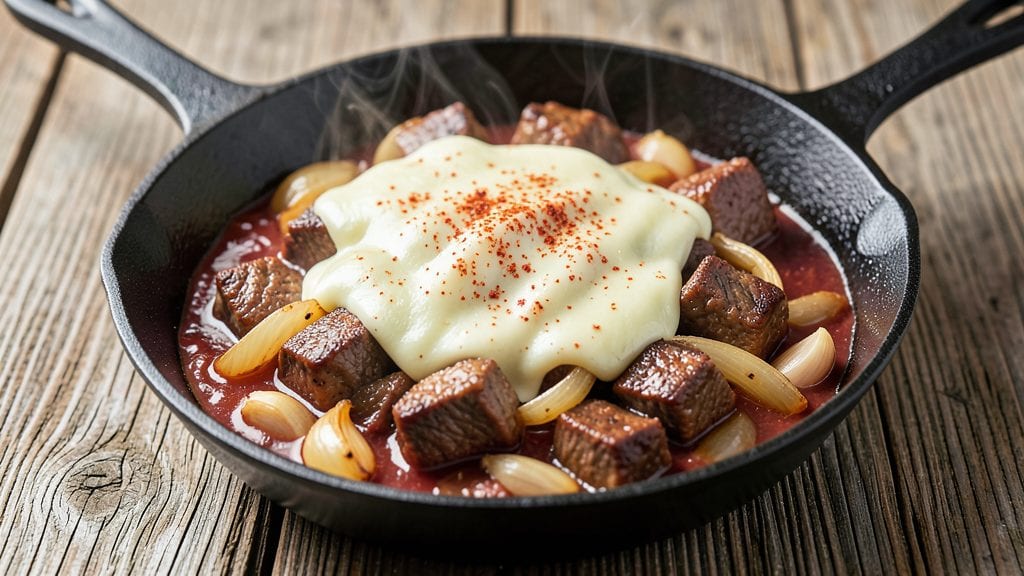
This cheese beef goulash recipe delivers the hearty, paprika-rich comfort of Hungary in one deep, flavorful pot. The secret lies in slow-browning beef with onions until caramelized, then layering it with tomatoes, paprika, and a blend of sharp cheeses that melt into the stew.
I perfected this version after years of testing—it’s the kind of dish that tastes even better the next day, with meat so tender it practically falls apart.
The beauty of goulash is in its balance: deep, smoky paprika for warmth, Edam or Parmesan cheese for richness, and a touch of sweetness from tomatoes to round out the flavors.
Unlike quick versions, this method simmers for hours, allowing the beef to transform from tough to fork-tender while the sauce thickens into a velvety, paprika-infused gravy. The cheese doesn’t just add flavor—it binds the stew, creating a cohesive, satisfying texture.
By the time you serve it, you’ll have a steaming bowl of tender beef, caramelized onions, and melted cheese swimming in a sauce that’s both robust and comforting.
The aroma alone will have everyone gathering at the table, and the first bite delivers that perfect marriage of spice, richness, and depth. Pair it with crusty bread to soak up every last drop—this is the kind of meal that feels like a hug in a bowl.
Whether you’re feeding a family or prepping for leftovers, this goulash scales effortlessly. The cheese adds a luxurious touch without overpowering the beef, and the paprika ensures every spoonful is packed with that unmistakable Hungarian flavor. Ready to make it? Let’s get cooking—your taste buds will thank you.
Ingredients for cheese beef goulash
Pantry staples meet deep Hungarian flavors in this rich, cheesy beef goulash.
| Ingredient | Amount | Notes |
|---|---|---|
| Beef Chuck Roast 🥩 | 2 lb | Cut into 1-inch cubes |
| Yellow Onions 🧅 | 2 large | Chopped into 1/2-inch pieces |
| Garlic Cloves 🧄 | 4 cloves | Minced for depth of flavor |
| Tomato Paste 🍅 | 1 tbsp | High-quality for richness |
| Sweet Paprika 🌶️ | 2 tbsp | Smoked paprika for extra depth |
| Edam Cheese 🧀 | 1 cup | Shredded, semi-hard variety |
| Parmesan Cheese 🧀 | ½ cup | Freshly grated for sharpness |
| Beef Broth 💧 | 4 cups | Low-sodium preferred |
| Red Wine 🍷 | ½ cup | Dry red like Cabernet |
| Olive Oil 🫒 | 2 tbsp | Extra-virgin for browning |
| Salt 🧂 | 1 ½ tsp | Diamond Crystal kosher |
| Black Pepper 🌶️ | ½ tsp | Freshly cracked |
| Bay Leaves 🍃 | 2 whole | Removed before serving |
| All-Purpose Flour 🌾 | 1 tbsp | For thickening sauce |
The beef is everything here. Chuck roast is ideal—it's tough enough to benefit from slow cooking but breaks down beautifully. Most grocery stores carry it pre-cut, but if you're buying a whole roast, ask the butcher to cube it for you. Costco or Whole Foods often have great prices on larger cuts. Look for good marbling—those little fat streaks are what make the meat tender. If you can't find chuck, brisket or short ribs work too, but they'll need even longer cooking. The onions? Yellow onions have the perfect balance of sweetness and bite—no need for red or white here.
No red wine? Beef broth with a splash of balsamic vinegar works perfectly. The cheese blend is key—Edam for tang, Parmesan for sharpness. Can't find Edam? Gouda or sharp cheddar at half the amount. Paprika matters too: smoked paprika adds depth, but sweet paprika works if that's what you've got. The tomato paste can be skipped if you're using a rich broth, but I always include it for that unmistakable goulash flavor. Fresh herbs? Thyme or parsley at the end brightens everything up—just don't overdo it.
This stew tastes even better the next day, so make a double batch if you can. Keeps in the fridge for 5 days or freezes for 3 months. I like to portion it into containers with a side of crusty bread—perfect for quick lunches. The cheese will separate slightly when reheated, but just stir it back in. For serving, I always add a sprinkle of fresh parsley and a crack of black pepper right before eating—worth the extra minute
Why You'll Love This Recipe
- One-Pot Magic: I swear by this recipe when I’m too tired to dirty three pans. The beef chuck roast practically melts into tender perfection while the onions caramelize right in the same pot—minimal chopping, zero fuss.
- Deep, Smoky Richness: That sweet paprika and tomato paste combo? It’s where this dish gets its soul. The beef soaks up all the earthy, slightly sweet flavors, and the garlic? Oh, it sneaks in like a flavor bomb you didn’t see coming.
- Leftovers That Beg for More: Between us, this recipe makes way more than I need for dinner. But honestly? The second day is even better—those flavors meld into something heartier, and I always find myself sneaking extra servings.
- Budget-Friendly Crowd-Pleaser: A chuck roast stretches for a week of lunches, and the onions/garlic/tomato paste cost pennies. I’ve served this at potlucks, game nights, and even my in-laws’ house—no one ever questions why I bring it.
Step-by-step instructions for cheese beef goulash recipe
This rich, paprika-kissed stew delivers melt-in-your-mouth beef and a velvety cheese finish every time.
Sear the Beef for Maximum Flavor
Heat the 2 tablespoons olive oil in a heavy Dutch oven over medium-high heat until shimmering. Working in batches, add the 2 lb beef chuck roast cut into 1-inch cubes, letting each piece develop a deep golden brown crust before stirring. This searing step creates the Maillard reaction - those flavorful browned bits that form the foundation of your goulash.
Don't rush this process. I press down gently on the beef cubes during the first minute to ensure even contact with the pan. Once all the beef is browned and removed from the pot, you'll have a beautiful layer of fond at the bottom - this is pure flavor you don't want to miss. Reduce heat to medium before proceeding to the next step.
Build the Paprika-Rich Base
Add the 2 large yellow onions chopped into ½-inch pieces to the Dutch oven and cook for 5 minutes until softened and slightly caramelized. Stir in the 4 cloves minced garlic and cook for 30 seconds until fragrant - you should smell that garlic releasing its sweet aroma.
Add the 1 tablespoon tomato paste and 2 tablespoons sweet paprika, stirring constantly for 1 minute to toast the spices. This step develops the deep, smoky flavor profile that defines goulash. Here's the thing - don't skip this toasting step. The paprika needs to bloom and release its full flavor potential before adding liquids.
Deglaze and Simmer the Stew
Pour in the ½ cup red wine and scrape up all those browned bits from the bottom of the pot with a wooden spoon. Let the wine simmer for 3 minutes until reduced by half. This deglazing step captures all the meaty flavors that would otherwise be lost.
Add the 4 cups beef broth, 1.5 teaspoons salt, ½ teaspoon black pepper, and 2 whole bay leaves. Bring to a gentle boil, then reduce heat to low, cover partially, and let it simmer for 2 hours. Here's where patience pays off - the beef needs this slow cooking time to become fork-tender. Stir occasionally to prevent the cheese from sticking to the bottom later.
Finish with Cheese and Thicken the Sauce
After 2 hours, stir in the 1 tablespoon all-purpose flour and let it cook for 2 minutes to remove any raw flour taste. Add the 1 cup shredded Edam cheese and ½ cup freshly grated Parmesan cheese, stirring constantly until completely melted and the sauce thickens to a velvety consistency.
The cheese should create a luxurious, creamy sauce that coats the beef beautifully. If the sauce is too thick, add ¼ cup hot beef broth to reach your desired consistency. Taste and adjust seasoning - you might need a touch more salt or pepper to balance the rich cheese flavors. Remove the bay leaves before serving.
Rest and Serve for Maximum Tenderness
Let the goulash rest for 10 minutes before serving. This resting period allows the juices to redistribute throughout the beef, ensuring each bite is moist and flavorful. The cheese will set slightly, creating that perfect pull-apart texture that makes this dish so satisfying.
Serve hot with crusty bread or over egg noodles. The beef should be fork-tender with just a slight resistance, falling apart easily. Each spoonful delivers layers of paprika warmth, rich beef flavor, and that creamy cheese finish that makes this goulash truly special. Real talk - this dish tastes even better the next day as the flavors meld together.
Pro Tips For Making Cheese Beef Goulash
- SEAR THE ONIONS FIRST: I used to toss everything in the pot at once, and the onions just sat there like sad, watery blobs. Instead, cook them low and slow in 2 tablespoons of oil for 10 minutes until they’re soft and golden—this builds flavor that won’t dissolve into the stew later.
- SWEAT THE GARLIC: After browning the beef, add the minced garlic and cook it for 30 seconds until it smells amazing—not burnt, just fragrant. This step makes the paprika sing instead of tasting like ash.
- STIR THE TOMATO PASTE: Don’t just dump the tomato paste in and walk away. Stir it into the onions and beef for 2 full minutes, breaking it down into tiny bits. This prevents clumps and ensures it blends smoothly into the sauce.
- LOW AND SLOW AFTER THE BROWN: The beef’s crust is non-negotiable, but once it’s in the pot, resist the urge to rush. Simmer at 190°F (88°C) for at least 2.5 hours—any faster, and the meat turns out chewy. (Yes, even if you’re impatient like me.)
Common mistakes when making great cheese beef goulash
Skipping the Sear
I can’t stress this enough—skipping the sear is the fastest way to ruin your goulash. That golden brown crust on the beef isn’t just for looks; it’s where the Maillard reaction happens, creating deep, meaty flavors that form the foundation of your stew.
If you rush this step or use too much oil, the beef will steam instead of brown, leaving you with bland, gray meat. Use a heavy Dutch oven like Lodge’s 5.5-quart model and work in batches if needed. 🔥
Undercooking the Beef
Patience is key with goulash—this isn’t a dish where you can rush the cooking time. Chuck roast needs at least 2 hours of simmering at low heat to break down into tender, melt-in-your-mouth pieces.
I’ve seen people pull the pot off the stove after 1 hour because the beef isn’t falling apart, only to end up with tough, chewy meat. Use a meat thermometer to check for an internal temp of 203°F—that’s when you know it’s done. Trust the process!
Adding Cheese Too Early
The cheese is what makes this goulash special, but adding it too soon can turn your rich stew into a greasy mess.
Cheese melts at 130-150°F, and if you add it before the beef is fully cooked, the heat will separate the fats, creating a thin, oily sauce instead of a creamy, velvety finish.
Wait until the beef has simmered for at least 2 hours and the sauce has thickened before stirring in the Edam and Parmesan. Stir constantly to prevent clumping, and if the sauce gets too thick, thin it with a splash of hot broth.
Ignoring the Fond
That browned layer of bits stuck to the bottom of your pot after searing the beef? That’s called fond, and it’s pure flavor gold. If you don’t scrape it up when deglazing with wine, you’re missing out on layers of depth that make goulash taste authentic.
Use a wooden spoon to scrape every last bit off the bottom—don’t just pour in the wine and walk away. This step is what transforms a simple stew into something truly special. 💡
Overcrowding the Pot
One of the biggest mistakes I see is overcrowding the Dutch oven with too much beef at once.
If you dump all 2 lbs of beef into the pot without browning it in batches, the meat will steam instead of sear, and the onions will release moisture too quickly, turning your base into a watery mess.
Brown the beef in 2 batches if needed, and let the onions caramelize properly before adding the garlic and spices. This ensures your goulash has the rich, concentrated flavors it deserves.
Skipping the Resting Time
After all that hard work, it’s tempting to dig in immediately—but skipping the 10-minute rest is a mistake. Letting the goulash rest allows the juices to redistribute throughout the beef, so every bite is moist and flavorful.
If you serve it right away, the beef will release its juices onto your plate instead of staying inside where they belong. Cover the pot loosely with a lid or foil and let it sit while you warm up the bread or noodles. Your taste buds will thank you! ✨
Nutrition facts
Frequently asked questions
Can I use ground beef instead of chuck roast for this goulash?
While ground beef works in a pinch, it won't give you the same tender, melt-in-your-mouth texture. For best results, stick with chuck roast or brisket—these cuts are designed for slow cooking and will break down beautifully. If you must use ground beef, brown it well first and simmer for at least 1.5 hours to develop flavor, but expect slightly different results.
What's the best cheese substitute if I can't find Edam?
No problem! Use sharp cheddar or Gouda for a similar tangy profile. For a milder option, try Pepper Jack or even Gruyère for extra depth. Just reduce the amount by half since these cheeses are stronger. The key is to balance the richness with something that won't overpower the beef and paprika flavors.
How do I make this goulash in a slow cooker?
Transfer all ingredients to your slow cooker after searing the beef and building the paprika base. Cook on low for 6-7 hours or high for 3-4 hours, then stir in the cheese during the last 30 minutes to melt it properly. The cheese won't thicken the sauce as much, so you may need to reduce it on the stovetop afterward if desired.
Can I make this goulash ahead of time?
This dish tastes even better the next day as the flavors meld together. Store in an airtight container in the fridge for up to 5 days or freeze for 3 months. When reheating, add a splash of broth to restore moisture—never microwave directly from frozen. The cheese will separate slightly, but just stir it back in before serving.
What's the secret to getting the perfect paprika flavor?
Toast the paprika in a dry pan for 1-2 minutes before adding it to the onions and garlic. This blooms the spices and intensifies their flavor. For extra depth, mix 1 tbsp sweet paprika with 1 tsp smoked paprika—the combination gives that authentic Hungarian warmth. Never skip the toasting step if you want restaurant-quality results!