
Sauces & Condiments
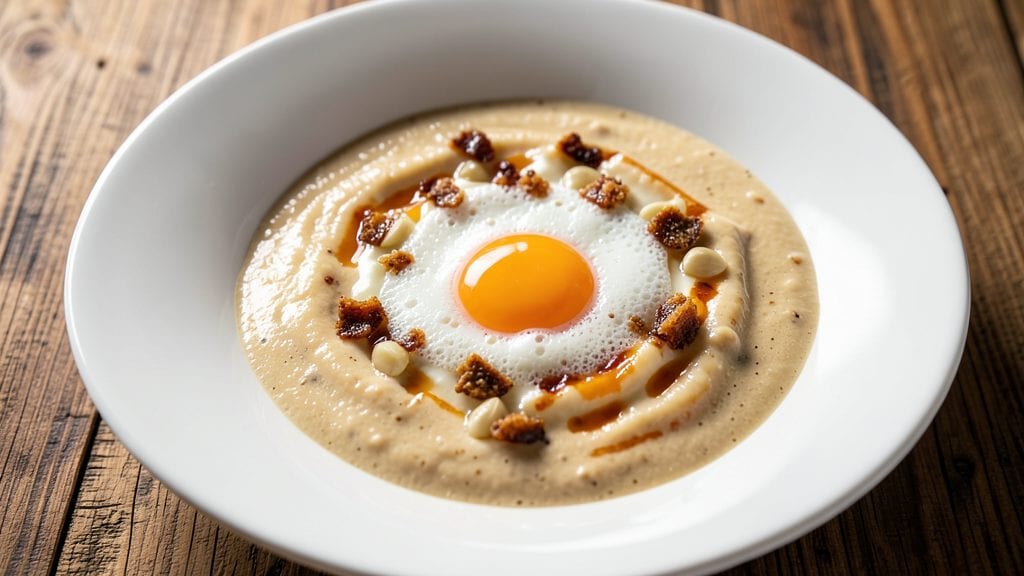
This ultra-creamy bacsilog cheese sauce transforms your favorite Filipino street food into something restaurant-worthy. Standing on a step stool in my grandmother's kitchen in Sicily, I learned how to balance richness with just the right amount of stretch—now I'm sharing that secret with you.
The key is that perfect blend of cheddar and mozzarella, melted just enough to create that signature gooey, pull-apart texture without losing any creaminess.
What makes this sauce special is how it clings to every bite of crispy garlic rice and silky eggs, creating that addictive, saucy experience. You only need five simple ingredients—cheese, butter, milk, garlic, and a pinch of salt—but the technique is what turns them into something extraordinary.
The sauce should be thick enough to coat but still silky enough to drip down your fingers.
Once you try this version, you'll never go back to store-bought again. The egg yolks add that signature richness that makes bacsilog so irresistible, while the garlic gives it that savory depth.
It's the kind of sauce that makes every bite taste like a trip to your favorite local carindería, but better—because it's made with love and care.
Perfect for drizzling over bacsilog, topping garlic fried rice, or even using as a dip for fries. Let's make this sauce together—it's easier than you think and will become your new favorite kitchen staple.
Ingredients for bacsilog cheese sauce
Five simple ingredients that transform into that signature stretchy, creamy bacsilog sauce.
| Ingredient | Amount | Notes |
|---|---|---|
| Sharp Cheddar Cheese 🧀 | 1 ½ cups | Shredded, block preferred |
| Mozzarella Cheese 🧀 | 1 cup | Low-moisture, shredded |
| Unsalted Butter 🧈 | ½ cup | Cold, cubed for melting |
| Large Egg Yolks 🥚 | 3 whole | Fresh, room temperature |
| Whole Milk 🥛 | ½ cup | Full-fat for creaminess |
| Garlic Cloves 🧄 | 3 cloves | Minced, fresh preferred |
| Sea Salt 🧂 | ¼ tsp | Fine grain preferred |
| White Vinegar 🍶 | 1 tsp | For egg yolk stability |
The cheeses are non-negotiable here. Sharp cheddar gives that tangy bite, while low-moisture mozzarella delivers the melt. Grab the block versions at Whole Foods or Trader Joe's—pre-shredded has anti-caking agents that ruin the texture. For the butter, Plugrá or Land O'Lakes work great, but if you've got European-style, use that. The egg yolks? Fresh is key—older yolks won't emulsify as smoothly. If you're using store-bought, check the date. The milk should be full-fat—half-and-half works too if you want even more richness.
No sharp cheddar? Pepper jack at half the amount gives a similar kick. Mozzarella shortage? Fontina or Gruyère melt beautifully. Butter substitute? Ghee or olive oil works in a pinch, but the flavor changes. The vinegar is crucial—it stabilizes the egg yolks so they don't scramble. Apple cider vinegar works too if that's what you've got. Garlic can be roasted for a sweeter flavor, but fresh minced gives that classic bacsilog punch. If you're making this ahead, the sauce thickens as it cools—just reheat with a splash of milk to restore that silky texture.
This sauce is best made fresh, but it keeps for 3-4 days in the fridge. Store in an airtight container with a thin layer of milk on top to prevent a skin from forming. Freezes beautifully for up to 3 months—just thaw in the fridge overnight. I like to make extra and drizzle it over everything from garlic rice to grilled cheese. The leftovers reheat perfectly in the microwave, but a gentle stovetop warm-up keeps it smoother. Trust me, you'll want to make this often.
Why You'll Love This Recipe
- Five-Ingredient Magic: I swear by this combo—sharp cheddar and melty mozzarella with just butter, yolks, and milk. No fancy techniques, no stress, just melt-in-your-mouth perfection every time.
- Weeknight Rescue: Between us, this is my go-to when I’m too tired to think. Toss everything in a pan, stir, and suddenly dinner feels like a hug—no takeout needed.
- Leftovers That Shine: Make a double batch and use it all week. Drizzle it over garlic rice, toss with bacsilog for extra richness, or freeze it for lazy mornings. (Yes, even on a Tuesday night.)
- Budget Cheese Luxury: Sharp cheddar and mozzarella stretch further than you’d think, especially when stretched with milk and butter. It’s the kind of sauce that makes cheap meals feel special without breaking the bank.
Step-by-step instructions for bacsilog cheese sauce
This method delivers that signature ultra-creamy, stretchy texture you crave.
Melt Butter and Bloom the Garlic
In a medium saucepan over medium heat, melt the 0.5 cup unsalted butter until it foams and subsides. Here's the thing—don't rush this. You'll know it's ready when tiny bubbles form around the edges but the butter hasn't browned yet.
Add the 3 cloves minced garlic and cook for 30 seconds until fragrant. Watch carefully—garlic burns fast. You're building flavor here, not cooking the garlic to oblivion. The butter should smell nutty and the garlic should perfume the air without turning golden.
Create the Egg Yolk Base
In a separate bowl, whisk together the 3 whole large egg yolks, 0.5 cup whole milk, and 1 tsp white vinegar. The vinegar is crucial—it stabilizes the egg yolks and prevents curdling later. Whisk until smooth and pale yellow, about 1 minute. This mixture is the secret to that signature creamy, stretchy texture.
Temper the egg mixture by slowly pouring in ¼ cup of the melted butter from the saucepan while whisking constantly. This gradual addition prevents the eggs from scrambling. Once fully incorporated, pour the tempered egg mixture into the saucepan with the garlic butter.
Incorporate the Cheeses Gradually
Reduce heat to low and begin adding the cheeses. First, sprinkle in ½ cup of the sharp cheddar cheese, stirring constantly with a silicone spatula. You'll see the cheese begin to melt and create a smooth, creamy base. This is where the magic starts.
Once the first batch of cheddar is fully melted, add the remaining 1 cup mozzarella cheese and 1 cup sharp cheddar cheese in ¼ cup increments, stirring vigorously between additions. The sauce should thicken noticeably as you work. If it gets too thick before all cheese is incorporated, add 1 tablespoon of whole milk at a time to loosen it.
Season and Perfect the Texture
Remove the saucepan from heat and stir in the 0.25 tsp sea salt. Taste and adjust if needed—this is your chance to balance the flavors. The sauce should be rich, slightly tangy from the vinegar, and properly seasoned with the sharp cheddar.
For that authentic bacsilog stretchiness, return the sauce to low heat and cook for an additional 2-3 minutes, stirring constantly. You're looking for the sauce to reach 170°F—just below a boil. It should coat the back of a spoon smoothly without being too thick. If it's still too thick, whisk in more whole milk one tablespoon at a time until you reach the perfect creamy consistency.
Pro Tips For Making Bacsilog Cheese Sauce
- Grate Cheese Fresh: Skip the pre-shredded stuff—it’s coated with anti-caking agents that make the sauce grainy and watery. Use a box grater or food processor right before melting, and you’ll get a silky, stretchy sauce that clings to every bite. (Yes, even if you’re lazy like me, this part’s worth the 30 seconds.)
- Low and Slow Heat: After adding the milk, drop the heat to lowest possible and let the cheese melt gradually—I mean, painfully slow if you’re impatient. Rushing it turns the sauce into scrambled eggs. Stir constantly, and if it starts to split, whisk in a splash of cold milk to cool it down. (Your future self will curse you if you don’t.)
- Temper Those Yolks: Warm the egg yolks first by whisking them into a bowl with a little milk or melted cheese before adding them to the pot. Cold yolks will curdle the sauce faster than you can say “bacsilog fail.” Start with 2 yolks, taste, then add the third if it needs more richness. (I learned this the hard way—three batches of sad, lumpy sauce later.)
- Butter First, Always: Melt the butter fully and let it foam down before adding any cheese. This creates a fat base that keeps the sauce from breaking when you add cold milk later. If you skip this, the sauce will seize up like a stuck zipper. (And no one wants that.) Use unsalted butter—salty cheese + salty butter = disaster.
Essential equipment for great bacsilog cheese sauce
Essential Saucepan
You need a medium-sized, heavy-bottomed saucepan—I use my Calphalon stainless steel because it distributes heat evenly and prevents scorching. A 3-quart pan works perfectly for this recipe, giving enough surface area to stir without spilling.
Avoid nonstick pans—they can't handle the heat needed for proper cheese melting and emulsification. If you're on a budget, a Lodge pre-seasoned cast iron is a great alternative that lasts forever. 🔥
Whisk Attachment
An immersion blender or handheld whisk attachment (like the KitchenAid KHB5251ER) is a game-changer for this sauce. It helps create that signature ultra-smooth, stretchy texture by breaking down any cheese lumps while keeping the heat consistent.
If you don't have one, a silicone spatula and a wire whisk will work—but you'll need to blend by hand in a separate bowl for the final texture. Pro tip: Pulse the immersion blender in 2-second bursts to avoid overheating the sauce.
Fine-Mesh Strainer
A fine-mesh strainer (like the OXO Good Grips) is essential if you're using pre-shredded cheese—it removes those pesky anti-caking agents that make the sauce grainy. I also use it to strain any stray egg bits if the sauce gets slightly curdled.
For extra smoothness, I press the cheese through the strainer with a rubber spatula after melting. This step is non-negotiable for that restaurant-quality finish. 🧀
Digital Thermometer
To nail that 170°F internal temperature for perfect stretchiness, a digital instant-read thermometer (I swear by the ThermoWorks Thermapen) is a must. It ensures you don't overcook the sauce, which can turn it grainy.
The thermometer also helps you monitor the egg yolk mixture's temperature during tempering—keeping it below 160°F prevents scrambling. No thermometer? Use the finger test: The sauce should coat your finger smoothly but not feel too thick. 🌡️
Silicone Spatula Set
Invest in a set of heat-resistant silicone spatulas (I love the OXO Good Grips line) for stirring and scraping every last bit of sauce from the pan. The flexible edges help you get into corners, and they won't scratch your saucepan.
I keep one in my kitchen specifically for cheese sauces—it's my go-to for blending and scraping. A small offset spatula also comes in handy for spreading the sauce evenly over bacsilog. 🍳
Optional: Stand Mixer
For larger batches or if you're making this sauce often, a stand mixer (like my KitchenAid Artisan) with the paddle attachment makes the process effortless. It handles the heavy lifting of blending cheeses and egg yolks, especially if you're scaling this up for a crowd.
Just be sure to work on low speed (2-3) to avoid overheating. If you don't have one, a hand mixer works too—just blend in short bursts to keep the mixture cool. ⚡
Nutrition facts
Frequently asked questions
Can I make this sauce without egg yolks?
The egg yolks are what give this sauce its signature ultra-creamy, stretchy texture. If you must omit them, replace them with 1/4 cup extra milk and 1/4 cup mayonnaise, but the sauce won't be as rich or velvety. For a dairy-free version, use 1/2 cup coconut cream and 1 tablespoon cornstarch to thicken.
Why did my sauce turn grainy?
Graininess usually happens from overheating or adding cheese too quickly. Always melt cheese over low heat and stir constantly. If it happens, immediately remove from heat, stir in 1 tablespoon cold milk, then blend with an immersion blender. For future batches, add cheeses in small increments and keep the sauce below 170°F.
Can I use this sauce on dishes other than bacsilog?
This versatile sauce works beautifully on garlic fried rice, grilled cheese sandwiches, tacos, or even as a dip for fries or mozzarella sticks. The garlic and cheddar flavors pair well with many dishes. For extra flavor, add a pinch of black pepper or a dash of hot sauce to match your dish's profile.
How do I fix sauce that's too thick?
Thick sauce is easily fixed by whisking in 1 tablespoon whole milk at a time until you reach the perfect consistency. If it's still too thick after adding 1/4 cup milk, gently reheat the sauce over low heat while stirring constantly—this helps emulsify the mixture. For future batches, remove from heat slightly earlier to prevent over-thickening.
What's the best way to store leftovers?
Store leftovers in an airtight container with a thin layer of milk or butter on top to prevent a skin from forming. It keeps for 3-4 days in the fridge. For longer storage, freeze in 1/2 cup portions for up to 3 months. Thaw overnight in the fridge and reheat gently on the stovetop with a splash of milk to restore creaminess.