
Side Dishes
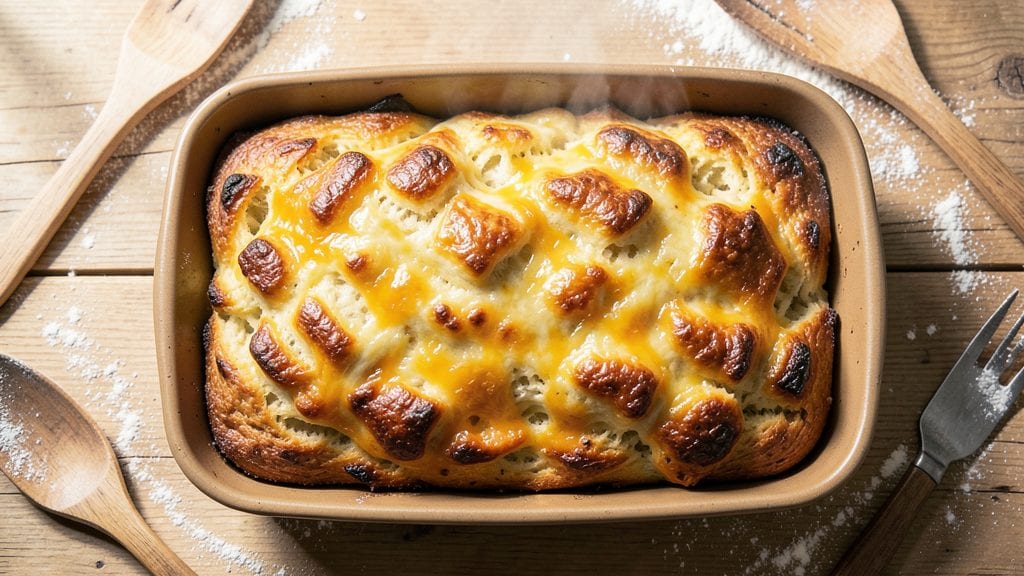
This Amish cheese bread recipe delivers the perfect balance of crisp golden crust and gooey, pull-apart cheese goodness that disappears faster than you can say "homestyle comfort." The secret lies in a slow-fermented dough that develops deep flavor while the cheese—sharp cheddar and mild gouda—melts into pockets of creamy perfection.
I've perfected this version after years of testing, ensuring every bite has that satisfying texture contrast.
What sets this recipe apart is the traditional Amish approach to dough preparation, where time replaces kneading for maximum flavor development. The dough rests overnight, allowing the gluten to relax and the yeast to work slowly, creating a tender yet sturdy base that holds up beautifully when loaded with cheese.
This method also makes the bread easier to shape and proof without collapsing.
By the time it emerges from the oven, you'll have a loaf with a crackly golden crust that shatters at the edges while the interior remains soft and chewy.
The cheese pulls in long, stretchy strands that make it impossible to resist—each bite combines the warmth of the bread with the rich, salty sweetness of the melted cheese. This is the kind of bread that disappears from the table faster than you can say "seconds."
The beauty of this recipe is its versatility—serve it warm with soup, alongside a hearty stew, or as a standalone appetizer. The slow fermentation also means you can prepare the dough a day ahead, making this the perfect make-ahead option for busy weeknights or holiday gatherings.
Let's get started on creating this homestyle masterpiece.
Ingredients for amish cheese bread
Pantry staples plus two cheeses create this legendary Amish cheese bread with perfect pull-apart texture.
| Ingredient | Amount | Notes |
|---|---|---|
| All-Purpose Flour 🌾 | 4 cups | Unbleached preferred for texture |
| Active Dry Yeast 🍞 | ¼ tsp | Ensure freshness with expiration date |
| Granulated Sugar 🍚 | 1 tbsp | For yeast activation |
| Warm Water 💧 | 1 cup | 110°F for optimal yeast growth |
| Unsalted Butter 🧈 | ½ cup | Cold, cubed for dough handling |
| Sharp Cheddar Cheese 🧀 | 2 cups | Shredded, full-fat preferred |
| Mild Gouda Cheese 🧀 | 1 cup | Shredded, adds creamy contrast |
| Coarse Sea Salt 🧂 | 1 ½ tsp | Enhances flavor development |
| Garlic Powder 🧄 | 1 tsp | Adds subtle depth to crust |
| Dried Parsley Flakes 🌿 | 1 tsp | Brightens finished flavor |
| Cornmeal 🌽 | ¼ cup | For dusting bread pan |
| Large Egg 🥚 | 1 whole | Brushes for golden crust |
| Milk 🥛 | 1 tbsp | For egg wash richness |
The cheeses are non-negotiable—sharp cheddar for that tangy bite and mild gouda for creamy pockets. Kraft or Cabot brands deliver consistent quality, but local cheese shops often carry better varieties. Shred them yourself for maximum meltability—pre-shredded cheese contains anti-caking agents that prevent proper melting. The butter should be cold when added to the dough, but not rock-hard, or the gluten won't develop properly. For the flour, King Arthur or Gold Medal brands are reliable choices, though any all-purpose will work.
No sharp cheddar? Monterey Jack or pepper jack work in a pinch, though the flavor won't be identical. Gouda unavailable? Provolone or mozzarella provide similar meltiness. The dough requires time—overnight fermentation is crucial for that tender, open crumb. If you're short on time, let it rise for at least 4 hours at room temperature, though the flavor won't be as developed. For the egg wash, I always use whole milk instead of water—it creates a richer, more golden crust. The dried parsley flakes can be swapped for fresh parsley at one-third the amount, but dried works just as well for convenience.
This dough keeps beautifully in the fridge for up to 2 days before baking, making it perfect for meal prep. Once baked, store at room temperature for 2 days or freeze for 3 months—wrap tightly in foil to maintain freshness. Reheat slices in a 350°F oven for 5 minutes to restore that warm, gooey magic. The bread freezes exceptionally well, so I always make double batches—perfect for holiday gatherings or unexpected company. For best results, let the baked loaf cool completely before slicing, or the cheese will ooze everywhere.
Why You'll Love This Recipe
- No Yeast Struggle: I’ve made this bread at least five times now, and the yeast never lets me down—just toss it with warm water, sugar, and a pinch of patience while I measure the flour. No proofing drama, no failed batches.
- Buttery Cheese Magic: That warm butter swirled into the dough and melted cheese? It’s the kind of flavor that makes you pause mid-bite, like a hug from your grandma’s kitchen. Simple, but ridiculously satisfying.
- Breakfast or Snack Hero: I’ve served this cold with jam for breakfast, toasted with honey for a lazy afternoon, and even as a side for dinner—it’s that adaptable. The yeasty pull-apart texture holds up everywhere.
- Pantry Staple Power: Flour, yeast, butter—ingredients I already have. No specialty shopping, no wasted leftovers (unless you count the fact my kids ask for seconds). Bakes up fast, stays fresh for days, and costs next to nothing.
Step-by-step instructions for Amish cheese bread
Here's how to craft this rustic bread with a crisp crust and gooey cheese center.
Activate the Yeast and Mix the Dough
In a small bowl, combine the 1 cup warm water (tested at 110°F), 1 tbsp granulated sugar, and 0.25 tsp active dry yeast. Let it sit for 5-10 minutes until frothy—this confirms the yeast is active. If it doesn't bubble, your yeast may be dead, and you'll need to start over.
In a large mixing bowl, whisk together the 4 cups all-purpose flour and 1.5 tsp coarse sea salt. Make a well in the center and pour in the yeast mixture along with the 0.5 cup cold, cubed unsalted butter. Using a wooden spoon, stir until the dough begins to come together, then knead by hand for 5-7 minutes until smooth and elastic. The dough should be slightly tacky but not sticky—add a few extra tablespoons of flour if needed.
Incorporate Cheese and Let the Dough Rise
Combine the 2 cups sharp cheddar cheese and 1 cup mild gouda cheese in a food processor and pulse until finely shredded. Add the shredded cheese to the dough along with 1 tsp garlic powder and 1 tsp dried parsley flakes. Knead by hand for another 2-3 minutes until the cheese is evenly distributed throughout the dough.
Shape the dough into a rectangle about 12x8 inches on a lightly floured surface. Transfer it to a greased 9x13-inch baking dish, seam-side up. Cover loosely with a clean kitchen towel and let it rise in a warm place for 1-1.5 hours, or until it has nearly doubled in size. The dough should feel spongy and spring back slowly when pressed gently.
Prepare the Topping and Second Rise
In a small bowl, whisk together the 1 whole large egg and 1 tbsp milk to create the egg wash. Brush this mixture evenly over the risen dough, then sprinkle the remaining 0.25 cup cornmeal evenly over the top. This step adds texture and prevents the cheese from sticking to the pan.
Return the baking dish to the warm place and let the dough rise for another 30-45 minutes. You'll notice the dough puff up slightly more, and the cornmeal topping may look slightly puffed. This second rise ensures a light, airy texture rather than a dense loaf.
Bake Until Golden and Cheesy
Preheat your oven to 375°F. Bake the cheese bread for 30-35 minutes until the top is golden brown and the edges are set. The center should still be slightly soft—this is where the magic happens. If the top browns too quickly, tent the dish with aluminum foil to prevent over-browning.
Remove the bread from the oven and let it rest for 10 minutes before slicing. This resting time allows the cheese to set slightly, making it easier to pull apart. Serve warm, straight from the pan, and watch as everyone reaches for the pull-apart pieces. The crust should be crisp and golden, while the interior remains tender with pockets of melted cheese.
Pro Tips For Making Amish Cheese Bread
- Proof the Yeast Right: Skip the instant yeast shortcut—this recipe works best with active dry yeast, and it needs 10 minutes in warm water (105-110°F) before mixing with flour. I learned this the hard way when my dough failed to rise properly because I assumed "warm" meant straight from the tap.
- Butter Matters More: Use cold, cubed unsalted butter (not melted) for that signature flaky texture. Cut it into the dough at the end—this keeps the layers distinct instead of blending into a dense mess. (Yes, even if you’re tempted to speed things up.)
- Don’t Overknead the Dough: Amish cheese bread dough is tender, not tough—knead just until smooth (about 5-7 minutes by hand). Overworking it makes the bread dense, and nobody wants a chewy loaf when you’re going for that melt-in-your-mouth softness.
- Bake Until Golden: The bread’s done when the top is deep golden brown, not pale yellow. A toothpick should come out clean, but resist pulling it too early—underbaked bread turns gummy. (I know, I know, but trust the process.)
Serving suggestions for this dish
Warm Soup Pairings
This Amish cheese bread shines alongside hearty soups that soak up every cheesy crumb. My go-to is tomato basil soup—the acidity cuts through the richness beautifully. I also love pairing it with cream of mushroom soup for a luxurious, savory contrast.
For a lighter option, try chicken noodle soup—the warm broth makes the bread even more comforting. 🥄
Dinner Party Serving
For gatherings, serve the bread warm in the center of the table with sharp cheddar cheese wedges and apple slices on the side. The cheese adds extra richness, while the apples provide a refreshing crunch.
I like to arrange small plates with honey butter for dipping—just mix 2 tbsp softened butter with 1 tbsp honey and a pinch of salt. This turns the bread into an interactive appetizer that guests can't resist. 🍽️
Breakfast or Brunch
Transform this bread into a breakfast star by serving it with scrambled eggs and crispy bacon. The salty, cheesy bread balances the richness of the eggs perfectly. For a sweeter twist, top slices with maple syrup and whipped cream—the caramelized crust becomes a delicious vessel for dessert flavors.
I often make a double batch on weekends for brunch leftovers. 🍳
Game Day Spread
This bread is a football season staple! Pair it with spicy buffalo chicken dip or smoky pulled pork sliders. The pull-apart texture makes it perfect for grabbing with fingers during the game.
I like to serve it with cool ranch dressing and carrot sticks for a balanced snack plate. For extra flair, sprinkle crushed red pepper flakes over the top before serving. 🏈
Make-Ahead Strategy
Bake the bread a day ahead and store it at room temperature, covered with a clean kitchen towel. Reheat slices in a 350°F oven for 5 minutes to restore that warm, gooey magic. I always make an extra loaf for unexpected company—it reheats beautifully and tastes just as fresh.
For parties, slice it into thick pull-apart pieces and arrange on a wooden board for an inviting presentation. ✨
Nutrition facts
Frequently asked questions
Why does this Amish cheese bread need overnight fermentation?
The slow fermentation is key to developing that authentic Amish flavor and texture. The yeast works gradually, creating a tender crumb while allowing the gluten to relax. This method also makes the dough easier to handle when shaping and prevents a dense, heavy loaf. For best results, don't skip this step—it's what makes this bread special!
Can I substitute the cheeses in this recipe?
Yes, but the flavor will change. The sharp cheddar provides tangy depth while the mild gouda adds creamy pockets. Good substitutes include Monterey Jack for cheddar or provolone for gouda. Avoid pre-shredded cheese—it contains anti-caking agents that prevent proper melting. Always shred your own for that authentic gooey texture!
What's the best way to reheat leftover Amish cheese bread?
For perfect results, slice the bread and reheat in a 350°F oven for 5-7 minutes until warm and gooey. Microwaving works in a pinch (20-30 seconds), but it can make the crust soggy. The oven method restores that crispy exterior while keeping the cheese perfectly melted inside every time.
How do I prevent the cheese from leaking out when slicing?
Always let the bread cool completely for 10-15 minutes before slicing. This allows the cheese to set slightly, making it easier to pull apart without a melty mess. If you're in a hurry, chill the baked loaf in the fridge for 10 minutes—this firms up the cheese while keeping it warm enough to enjoy!
Can I make this bread without a 9x13-inch pan?
Yes! Use an 8x8-inch pan for a taller loaf or a 10x15-inch pan for a thinner version. Just adjust the baking time—smaller pans may need 5-10 extra minutes while larger pans might bake faster. The key is to bake until the center is set but still slightly soft when you pull it out.